Blood, Sweat, and Sawdust

Going against the grain

Category: Tools

A Marking Knife to Rule Them All

Czeck Edge Pattern Pilot

The Czeck Edge Pattern Pilot marking knife

The ability to accurately mark out stock is critical. Unfortunately, not all marking knives are created equal. I’ve been using the Pattern Pilot from Czeck Edge for a few months now and have grown to love it. It’s not perfect for every task, but it excels at those for which it was designed.

The Pattern Pilot has a 1-3/4″ long blade made from 0-1 tool steel. The tip forms a 65 degree spear-point from dual 40 degree bevels. The steel takes a very nice edge, and the blade is long and thin enough to fit into the tightest of places. The handle is turned from gorgeous cocobolo, and feels very nice in your hand. It quickly became my go-to tool for marking out dovetails.

The Pattern Pilot isn’t perfect for every task. For example, I prefer a knife with a shorter, more robust blade for marking across wide boards. My only other complaint is that honing these small spear-point blades is a chore. I think that is a skill that will improve with time.

Overall, the Pattern Pilot is joy to work with.  It excels at getting into tight places.  It’s comfortable to use and looks beautiful.

Sharpening: Regrinding a Bevel

securedownload-2

Keeping your tools sharp is paramount to enjoying the time you spend in your shop working wood.  This is even more important to those of us who have limited time to spend in the shop.  If you’re like me, you enjoy building furniture more than you enjoy sharpening your tools.  The best way to minimize the time you spend maintaining your tools is to have a solid game plan and become as efficient as possible.  The only way I know to accomplish this is through practice.

For me, the first step in the process is determining whether a tool needs to have its primary bevel reground, and that is the topic that I want to explore today.  Whether from edge damage or a secondary bevel that’s grown too large, you’ll eventually want to regrind your bevels.  I find that the quickest way to do this is with a hollow grind using a benchl grinder.  Below I will describe the process that I use on my 8″ low speed grinder.

securedownload-3

Here, I have determined that the edge of this chisel is damaged and no longer square.  I start by using a square and a sharpie to mark a reference line just shy of the damaged area.

securedownload-4

securedownload-5

Next, I position my tool rest roughly perpendicular to the wheel and grind to my line.  This will leave a flat spot that is square to the sides of the blade.  Use a steady side to side motion until you reach your line.
securedownload-1

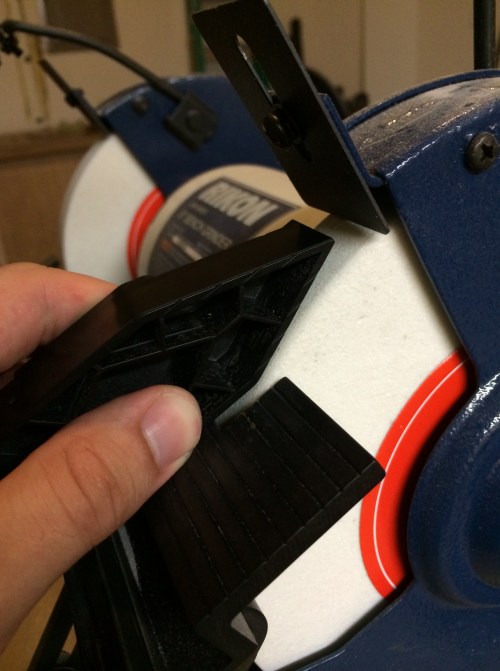
Once I have a square edge, I reposition the tool rest to the desired bevel angle and carefully grind until the flat area is almost gone.  For general work, I prefer a 25 degree primary bevel.  Keeping a small portion of the flat area makes it easier to avoid overheating which can remove the temper from the blade.  However, you don’t want to leave too much, or honing might become a chore.  If I were simply regrinding a dull edge, I would keep a sliver of the secondary bevel, as this also reduces the amount of time spent honing the edge.

Here are some key points to remember:

Always keep the tool square to the wheel unless creating a cambered blade is the desired result.

Apply consistent pressure to the tool when moving across the wheel.

Move your tool across the wheel at a steady speed.

Always dress your wheel before grinding.  I find that rounding the corners of the wheel slightly help with transitioning the blade across the wheel.

You’ll know you’re on the right track when you can consistently produce a new bevel that consists of a single facet across the entire face of the blade.  My next post will detail the honing process.

Handtool Basics

I’ve been meaning to spend more time developing my hand tool skills, and I thought it would be a great opportunity to write about the process. I find that the writing process helps me obtain a deeper understanding of the topic being discussed. Hopefully, it will provide insight to someone else along the way.

I plan to start with the basics and progress to more complicated tasks. I will include everything from sharpening and milling to joinery. I will detail my process and include lots of photos. My goal is to blog atleast one post per week regarding the topic. So, follow along and join in. I would love to hear your questions and suggestions.

Traditional Sawbench

When began my journey with hand-tools, I thought it would be prudent to invest in some panel saws. I purchased a couple on eBay, and set out to get them as sharp as I could. Unfortunately, my two beautiful pre-war Disston’s have hung on the wall ever since. I thought I had my saws reasonably sharp, but always struggled cutting anything harder than pine. It wasn’t until I decided to build a traditional saw-bench, that I found the answer to my problems.

Building the saw bench was rather straight forward. I broke down my stock to rough dimensions using my bandsaw. Then I milled the rough boards to final dimensions with my trusty Stanley no. 5. The joinery was accomplished with a few simple half laps and bridle joints. The bench was then assembled with Tight Bond III and some cut nails. It wasn’t until I used the bench for the first time that I discovered just how magical good ergonomics could be.

The saw bench is a marvel. It puts the work at knee height, so that you can use your body weight to hold the piece in place. It puts your body in proper alignment so you get good leverage and can track a straight line. Additionally, it’s much easier to track to a straight, square line with the saw plate hanging downwards. It’s amazing how much easier the saw seems to cut.

Never underestimate the power of ergonomics when it comes to using your hand tools. As a result of my recent enlightenment, I have decided to rethink just about everything in my shop. I chopped an additional 3 inches from the height of my work bench and am considering going even lower.

Hand Plane Tune-up

Due to a limited budget, I started my hand tool journey by refurbishing some old tools.  Among these, was an old Stanley no. 5C that I received from my grandfather.  Despite finding it on the side of the road, it was still in relatively good condition.  It had lots of surface rust, but the sole was reasonably straight, so I decided to give it a shot.

After an initial tune up, I put it to work against some pine.  I was astonished at how well it cut.  However, my excitement was short lived.  Putting it to work on an oak board revealed just how inadequate my restoration had been.  The blade would jam, jump, and skitter across the board.   I was determined to figure out where I had gone wrong.

I scoured the Internet for solutions.  I fully disassembled the plane, and checked every part for possible defects.  It seemed as though I found something wrong with every part.  I fiddled and fiddled, until the tool performed flawlessly.  It was a frustrating journey, but wisdom was gained from the experience.

If you’re having issues with the performance of your plane, don’t overlook the following:

1) Is the sole truly flat?  Mine would rock slightly on a flat surface.
2) Are there any gaps between the blade and cap iron?  Hone the cap iron.  Play with the distance.  Make sure the nut is as tight as you can get it.
3) How cleanly does the lever cap mate?  Is it tight enough?  Hone the lever cap
4) How sharp is the blade?  Can it easily shave the hair off the back of your arm?  If not, work on your sharpening.
5) Is the face of the frog flat?  Flatten it.  Does it rock in the sole with the screws backed off?  Check all four corners
6) Are the totes tight?  Back off the short screw in the rear tote.  Does is wobble?  I had to cut some threads off the long screw.

Don’t leave any stone unturned, and don’t give up.  Happy planing.

Time to unwind

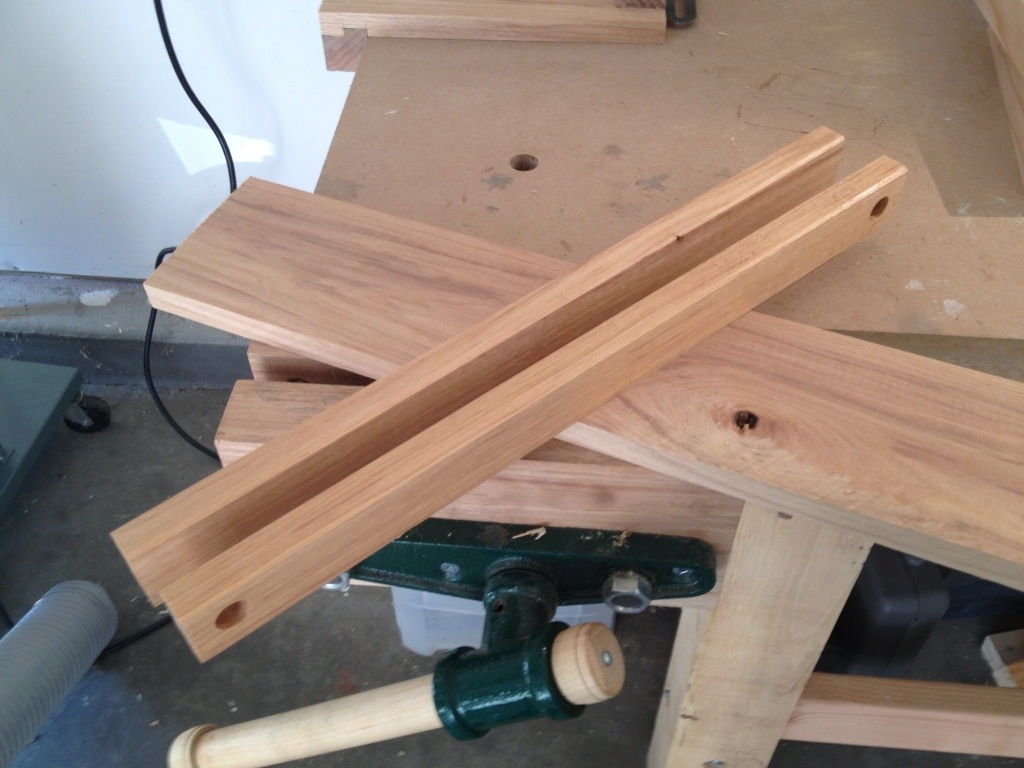
Beautiful furniture requires accurate joinery, and that accuracy requires square boards which are free of twist. Even small amounts of twist can wreak havoc with forming solid joints. To detect these minute amounts of warpage, a tool is needed. The tool most often employed is the winding stick. Winding sticks are nothing more than a pair of long straight sticks that are laid across each end of a board to amplify any existing twist to the eye.

I made mine out of hickory, because it is a very hard wood with straight grain. Each one is approximately 18 inches long, with a pair of holes on one board to make sighting any twist a bit easier. I also chamfered the tops of each board to remind me that I only need to maintain one side. I finished them with a couple of coats of tongue oil.

20130917-200221.jpg

Bench Hook Complete

20130914-130437.jpg

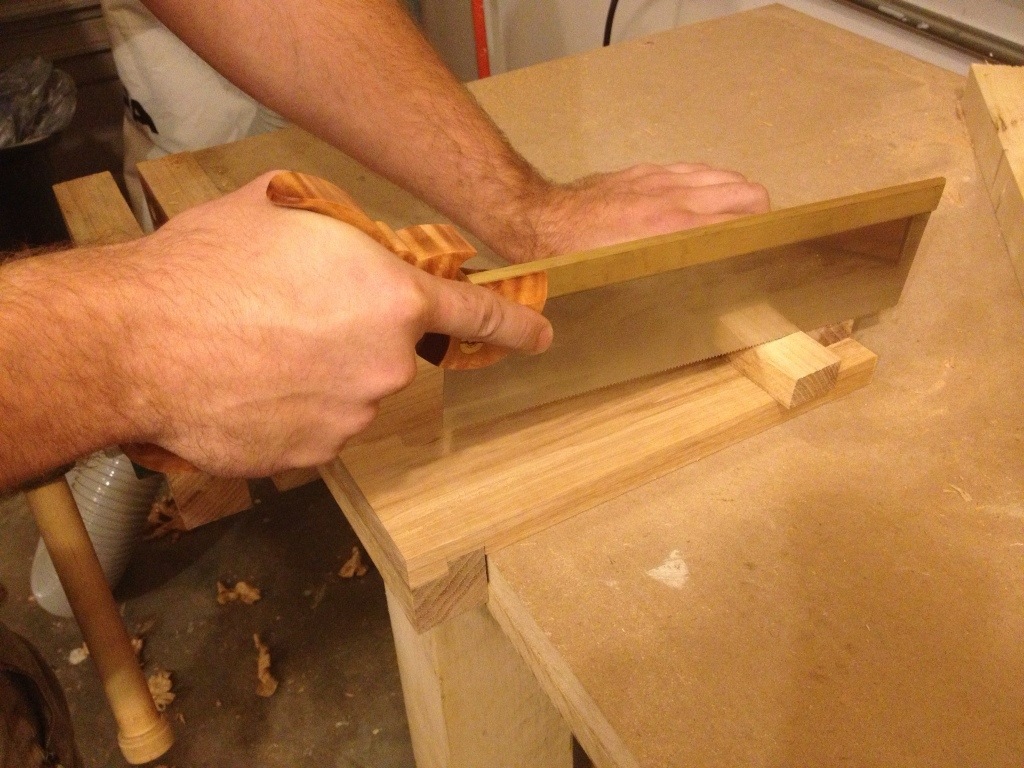
Using hand-cut dadoes for my first bench hook may have been a little overly ambitious. However, it was an excellent opportunity to build skills, and I am pleased with the results. It definitely makes finish quality crosscuts much easier. The biggest lesson learned was to make your crosscuts as close to final dimensions as possible. Squaring up large areas of end grain with a block plane is not fun.

New Toy: Rikon 10-325 Bandsaw

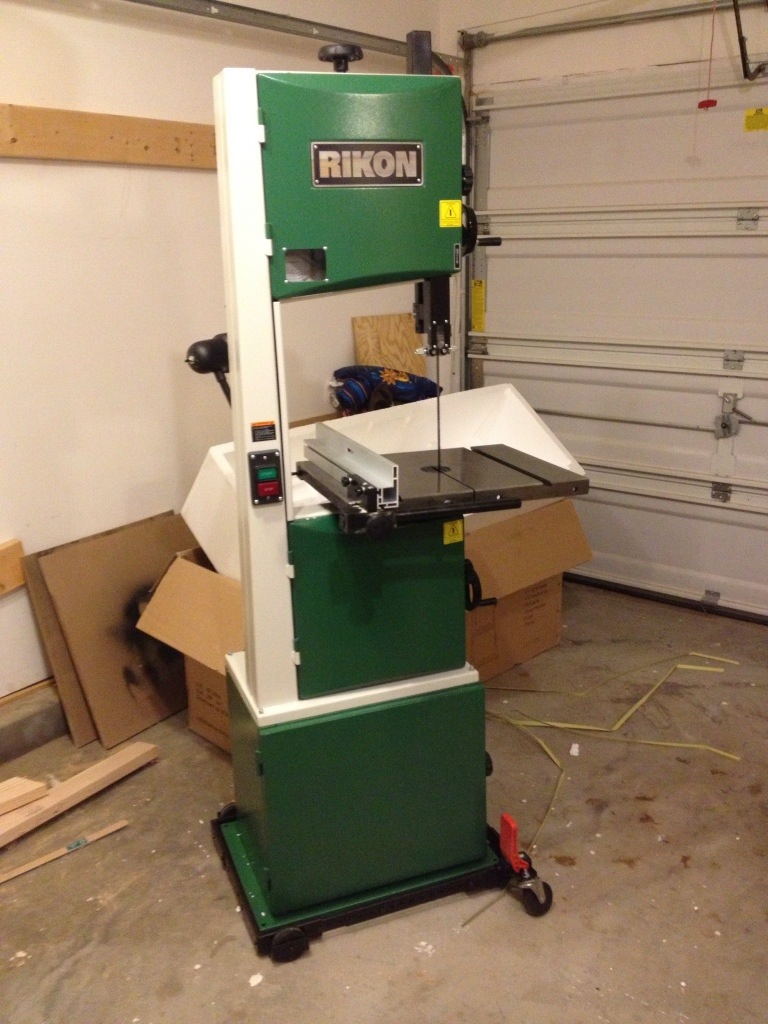
After months of deliberation and daydreaming, I finally picked up my first bandsaw. I chose the Rikon 10-325 bandsaw for several reasons. There is a dealer near by (Highland Hardware). It meets all of my current needs. It seems to be well liked by the community. And, it has a 5 year warranty. I spent much of the weekend assembling the saw, but haven’t yet been able to start her up. The instructions are somewhat lacking, but assembly was rather straight forward.

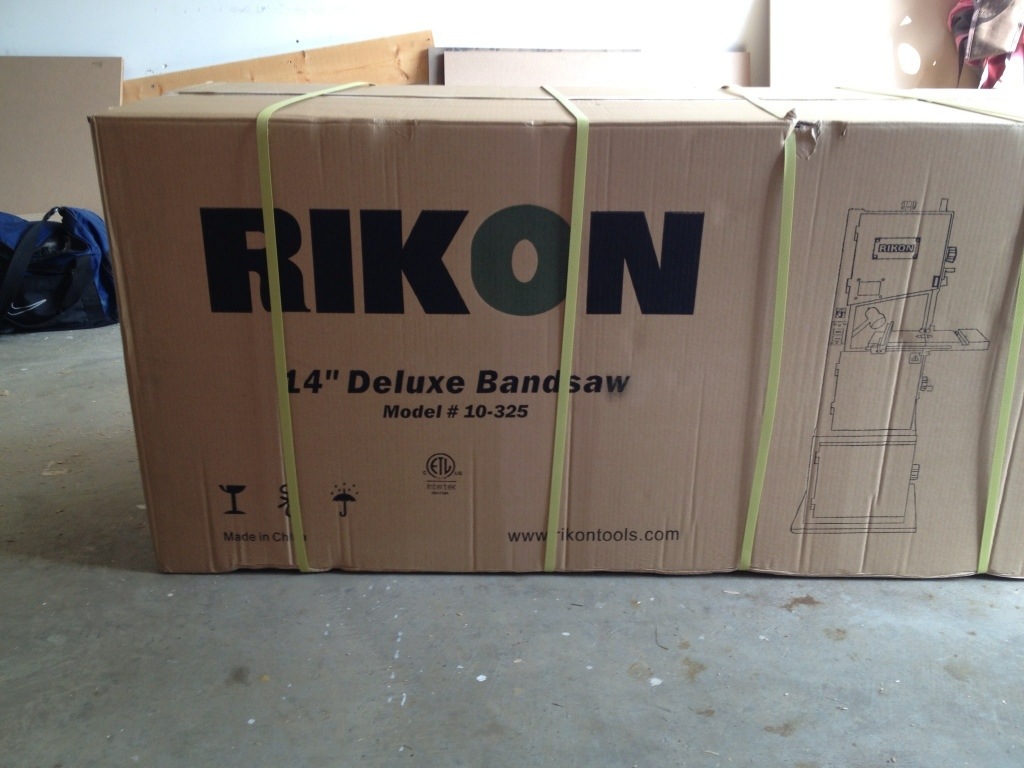
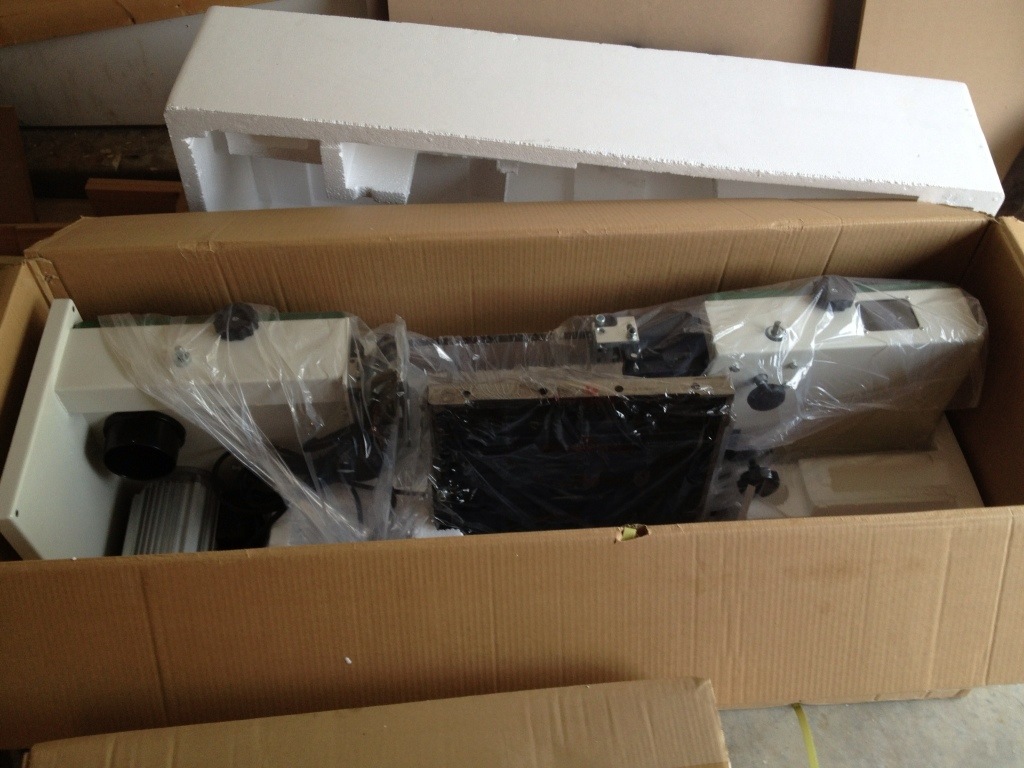
20130904-170320This is the box in which the saw arrives.


20130904-170440Here are the contents, after opening the box.


20130904-170540

You first assemble the base, fastening the supplied bolts hand-tight. I choose to use a mobile base that I picked up from Wood Craft. I placed the assembled saw base on the mobile base before things got too heavy. Unfortunately, it slipped my mind to take photos of this step.

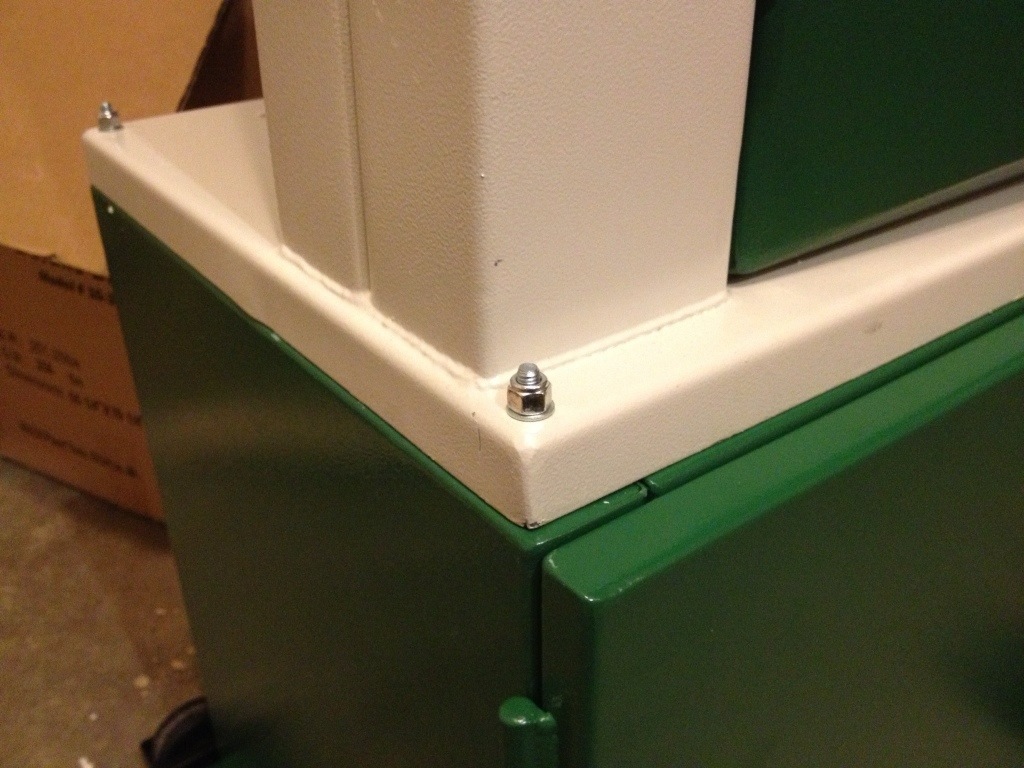
You’ll definitely need a friend to lift the saw onto the base. The instructions weren’t very clear on how to mount the saw to the base. Rikon supplies four bolts, each with a hex nut, nylon locking nut, two large washers and a small washer. After consulting Dr. Google, I decided to install the bolts from below the base in the following order: bolt, large washer, base, larger washer, hex nut, saw, small washer, nylon nut.

20130904-170823

Here is a close up of the bolt installation.

Rikon 10-325 Bandsaw

The rest of the assembly is pretty simple. You simply install the table using four hex bolts, and then install all of the accessories. I still need to level the table and set the blade tracking. I plan to have a full review sometime in the following weeks.

New Toy

After months of deliberation and daydreaming, I finally picked up my first bandsaw. I chose the Rikon 10-325 14″ bandsaw for several reasons. There is a dealer near by (Highland Hardware). It meets all of my current needs. It seems to be well liked by the community. And, it has a 5 year warranty. I spent much of the weekend assembling the saw, but haven’t yet been able to start her up. The instructions are somewhat lacking, but assembly was rather straight forward.

20130904-170320.jpg

This is the box in which the saw arrives.

20130904-170440.jpg

Here are the contents, after opening the box.

20130904-170540.jpg

You first assemble the base, fastening the supplied bolts hand-tight. I choose to use a mobile base that I picked up from Wood Craft. I placed the assembled saw base on the mobile base before things got too heavy. Unfortunately, it slipped my mind to take photos of this step.

You’ll definitely need a friend to lift the saw onto the base. The instructions weren’t very clear on how to mount the saw to the base. Rikon supplies four bolts, each with a hex nut, nylon locking nut, two large washers and a small washer. After consulting Dr. Google, I decided to install the bolts from below the base in the following order: bolt, large washer, base, larger washer, hex nut, saw, small washer, nylon nut.

20130904-170823.jpg

Here is a close up of the bolt installation.

20130904-170638.jpg

The rest of the assembly is pretty simple. You simply install the table using four hex bolts, and then install all of the accessories. I still need to level the table and set the blade tracking. I plan to have a full review sometime in the following weeks.

Curious Stanley Hand Drill

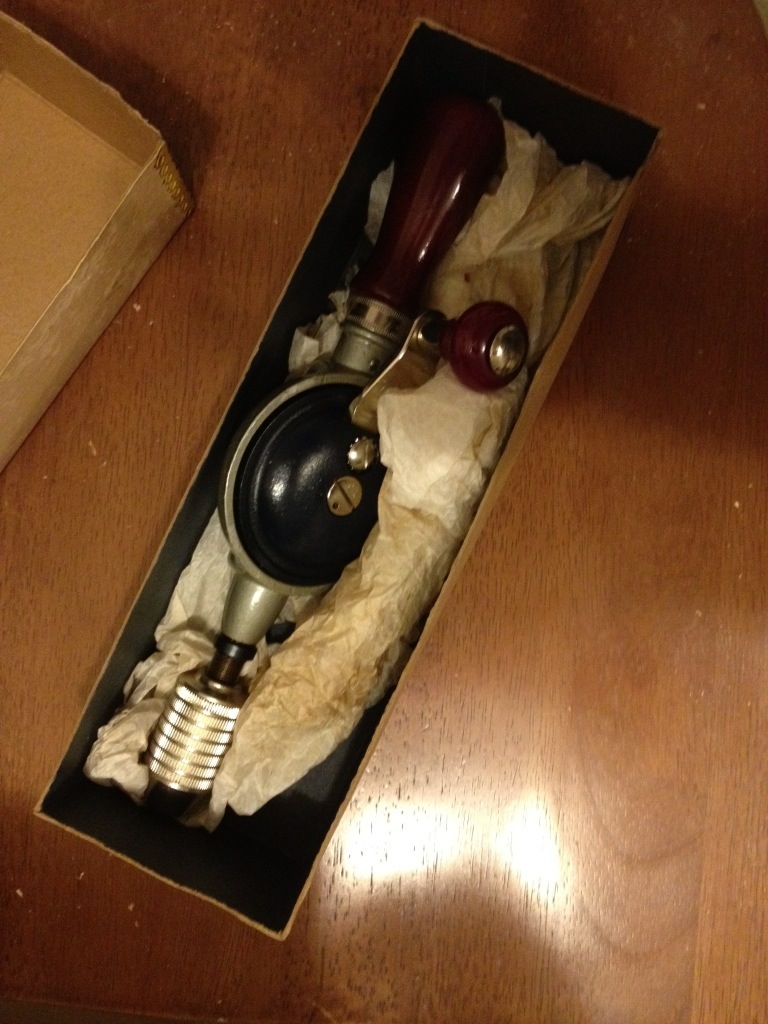
I was given this Stanely “Egg-Beater” style hand drill over the weekend. I don’t believe it’s very old; possibly from the 60’s or 70’s. What’s interesting about it is that it was built for Southern Bell. It’s never been used and was given to me in the original box. The chuck and the action both seem to work great. Unfortunately, I wasn’t able to dig up any information on this particular model. So, if you have any more information, leave a comment.

20130903-161621.jpg