Blood, Sweat, and Sawdust

Going against the grain

A Taste of Things to Come

Sony a6000

Sony a6000

Video is something completely new to me, but I think it will add a lot of value to my content.  Most of the videos I post, will consist of me attempting something for the first time.  Hopefully, I will be able to save you from a few of the mistakes I am sure to make a long the way.

I spent some time this weekend getting to know my new Sony a6000.  I also spent some time getting to know my video editing software, and where to find royalty free music.  I am a complete newbie, so bear with me.  Fortunately, I’m naturally artistic, so this shouldn’t be too bad.

If there’s anything you like to see, drop me a line in the comments section.  See you soon.

Epifanes Marine Varnish: An Exterior Wood Finish That Lasts

Epifanes Marine Varnish: An Exterior Finish that Lasts

Epifanes: An Exterior Finish that Lasts

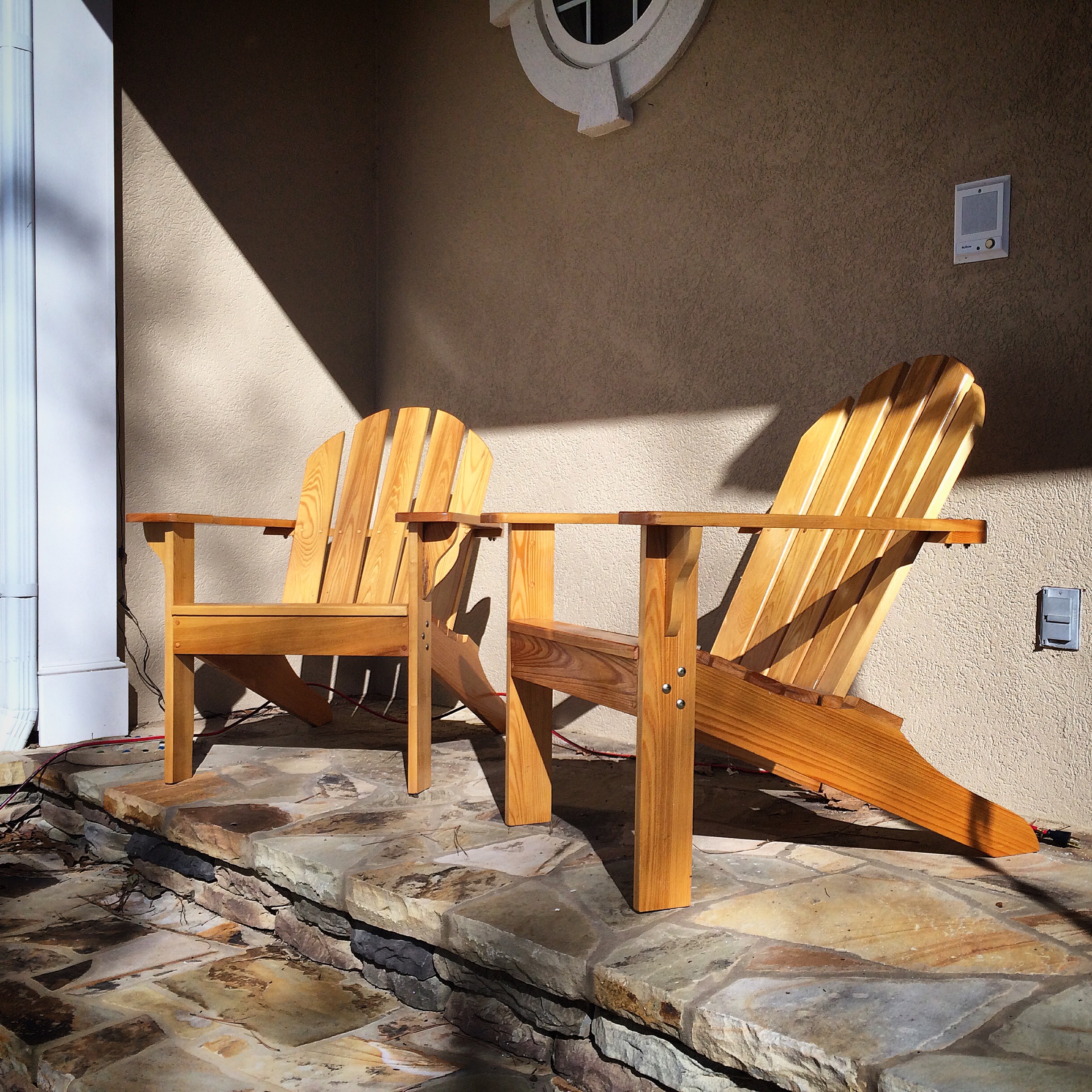
About a year ago, I built a pair of Adirondack chairs for a client. I had already built a similar pair of chairs before, but the client wanted a nice exterior finish. I wanted to ensure that they got what they were looking for with as little maintenance as possible. The sun can be harsh.

I scoured the Internet. I reviewed what seemed like hundreds of options. However, I kept running across a particular marine varnish. Enter Epifanes.

The high gloss finish might not be for everyone, but the promises of longevity were there. Thinned down a bit, it was easy enough to apply. Most importantly, the clients seemed happy with the appearance. Yet, concerns of maintenance troubled me.

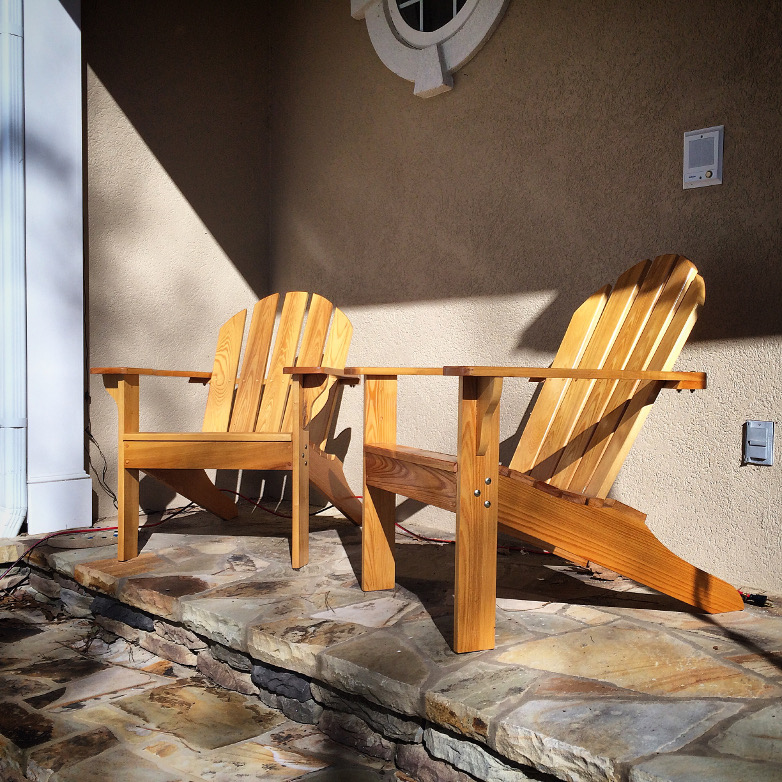
While visiting family over the weekend, I had the opportunity to check up on the chairs and see how they were holding up. The chairs sit on a porch that recieves a lot of direct sunlight. I was a little worried of what I might find. Fortunately, the finish is holding up great. Despite a year of direct sunlight, the varnish still looks fresh. Not even a hint of hazing.

If you don’t mind the high gloss look, I would highly recommend Epifanes marine varnish.

An Exterior Wood Finish That Lasts

Adirondack Chairs with Epifanes Marine Varnish

Adirondack Chairs with Epifanes Marine Varnish

About a year ago, I built a pair of Adirondack chairs for a client. I had already built a similar pair of chairs before, but the client wanted a nice exterior finish. I wanted to ensure that they got what they were looking for with as little maintenance as possible. The sun can be harsh.

I scoured the Internet. I reviewed what seemed like hundreds of options. However, I kept running across a particular marine varnish. Enter Epifanes.

The high gloss finish might not be for everyone, but the promises of longevity were there. Thinned down a bit, it was easy enough to apply. Most importantly, the clients seemed happy with the appearance. Yet, concerns of maintenance troubled me.

While visiting family over the weekend, I had the opportunity to check up on the chairs and see how they were holding up. The chairs sit on a porch that recieves a lot of direct sunlight. I was a little worried of what I might find. Fortunately, the finish is holding up great. Despite a year of direct sunlight, the varnish still looks fresh. Not even a hint of hazing.

If you don’t mind the high gloss look, I would highly recommend Epifanes marine varnish.

A Quick Roubo Build Update

Here’s where all of that hard work on the Roubo bench top really starts to pay off.

After milling up two of the top sections, I took a couple of passes with my No. 7 to clean up any snipe. Then I broke out the saw benches for a test fit. Everything looked pretty good. With the boards oriented for optimal appearance, there was a slight bow in one of the boards that was preventing the ends from meeting. I brought out the No. 7 and planed down the hump until I was satisfied. A second test fit revealed that one of the boards had an edge that was slightly out of square. This resulted in some cupping that would be more difficult to remove later. Back to the jointer. I was fully satisfied after the third test fit.

Roubo Slab Glue-up

Roubo Slab Glue-up

I proceeded to rehearse my glue up. I lightly tightened parallel clamp at each end of the slab and one in the middle. Then, I placed an F-clamp on the seam at each end to ensure that the boards would stay aligned. I tightened down the parallel clamps and checked for any defects. No gaps, no cupping. Everything looked great, so I proceeded with my glue-up.

Roubo Benchtop Looking Good

Roubo Benchtop Looking Good

The assembly is now out of the clamps and looking good. I suspect it weights just shy of 100 lbs. I ended up with 10 5/8th inches of width and 4 5/8th of thickness. I hope to have the other half completed by the weekend. Stay tuned!

You can find links to my other Roubo posts here:  Project Index

Roubo Build: Jointing Wide Edges Dead Square

Jointing Wide Edges by Hand

Jointing Wide Edges by Hand

Jointing wide edges can be tricky. Fortunately, I did my research. It was time consuming, but not difficult.  If I can do it, so can you.

Before you joint an edge it’s important that you establish a reference face that is flat, straight, and free of twist. I covered how I accomplished this here: Milling the large beams for the Roubo bench top

Once you’ve established a reference face, it’s important to assess the board.

  • What are the major defects?
  • Is there any significant bow along the length?
  • How out-of-square is the edge?

I don’t worry too much about minor cupping. This will be remedied, by running both sides through the planer.

Checking for Bow Along the Length

Checking for Bow Along the Length

In my case, there was some significant bowing. I measured about 1/16th of an inch in the middle of the board using a 48 inch straight edge. The edge was also significantly out of square. I chose to tackle the bow first. I removed the high-ends of the board by taking overlapping diagonal passes with my No. 7. When I was close, I started taking overlapping passes along the length of the board. Start from the outside and work your way towards the center of the board. I continued until there was less than 1/64th of error.
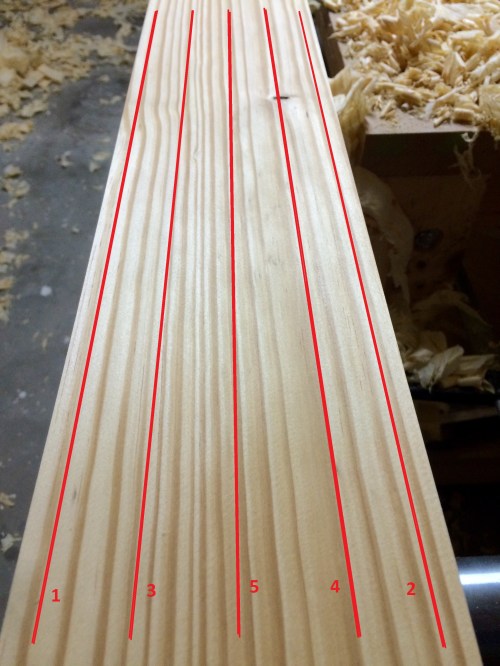
Take Overlapping Passes from the Outside to the Center

Take Overlapping Passes from the Outside to the Center

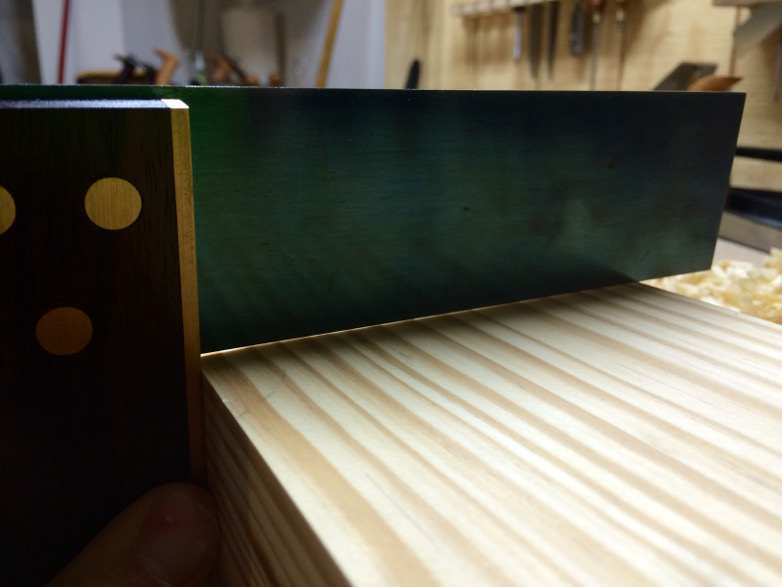
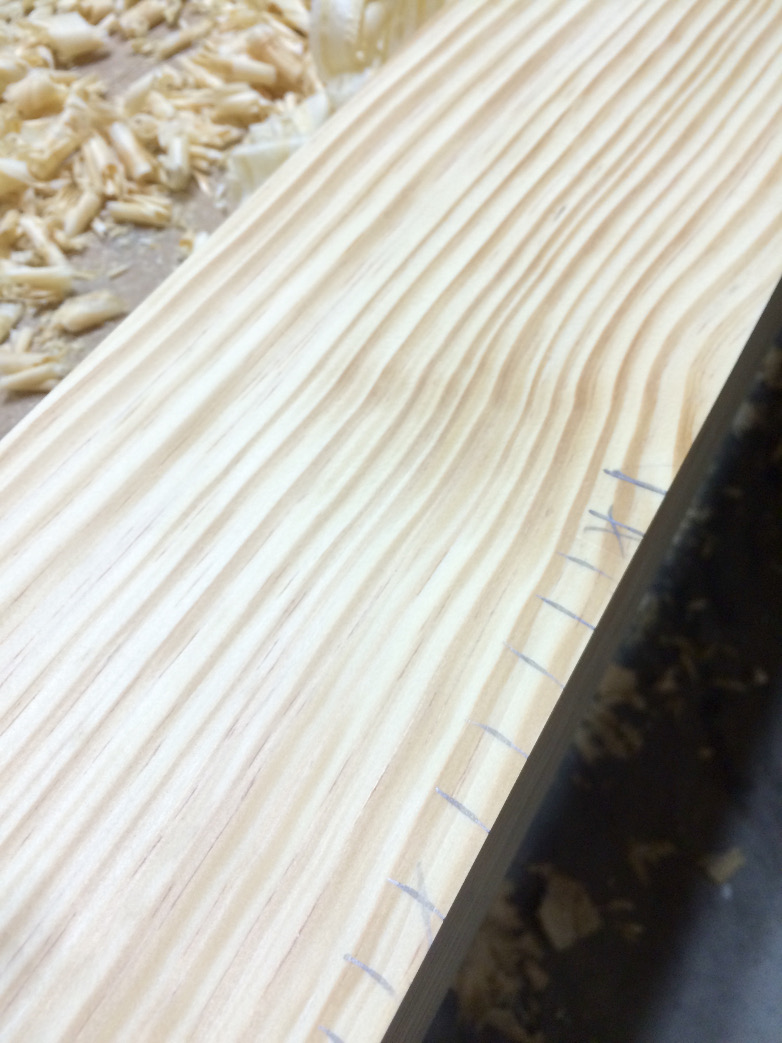
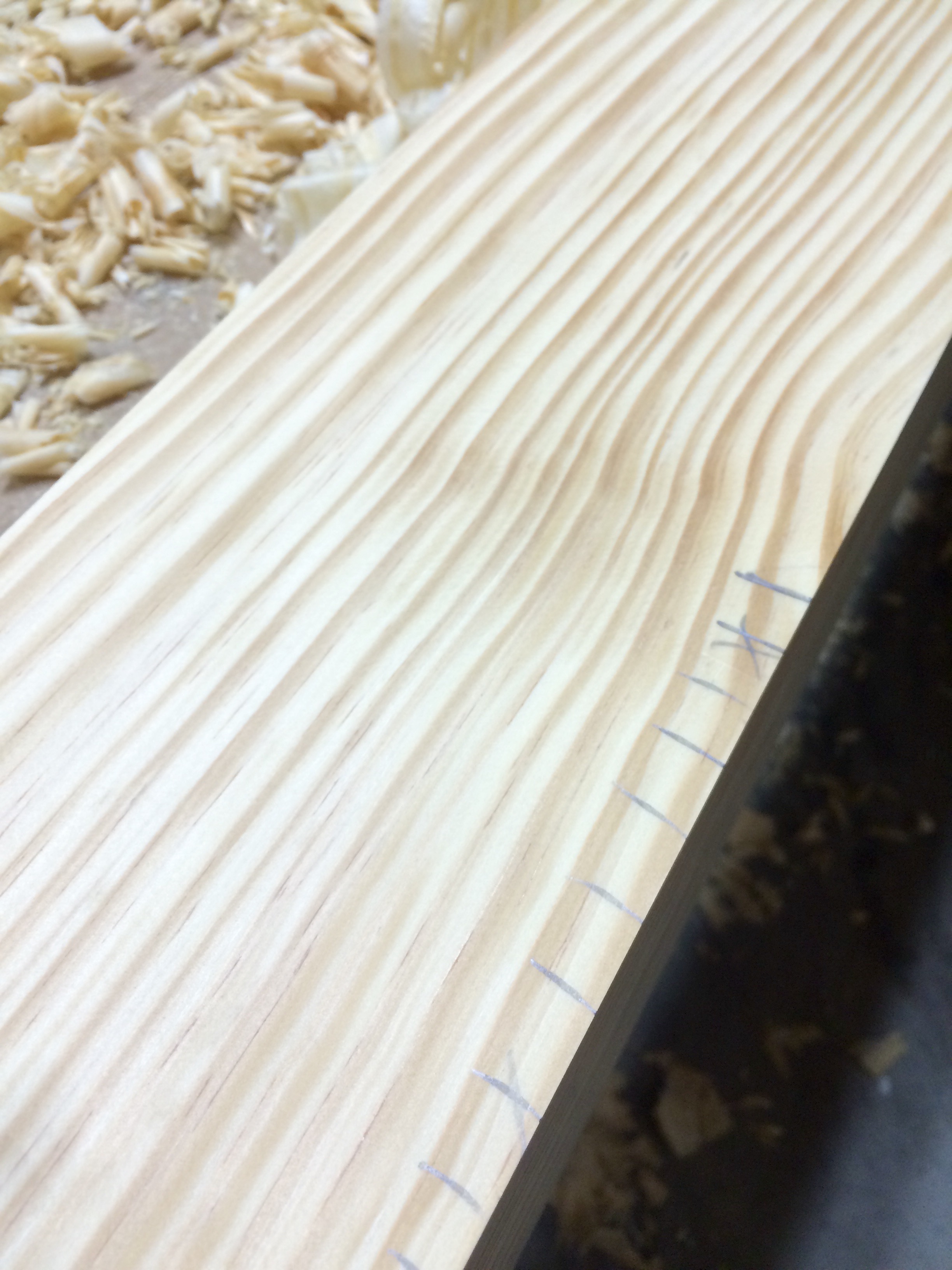
With the bow removed, I started working on getting the edge square to my reference face. I reassessed the board and mark the low spots with a pencil. Take a shaving from each edge, being careful to avoid your pencil marks. Then work your way inwards taking full-length shavings. Reassess the board every couple of passes. If you’re lucky, one side will be high for the entire length of the board.
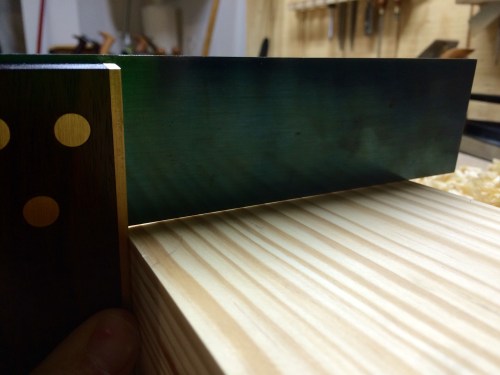
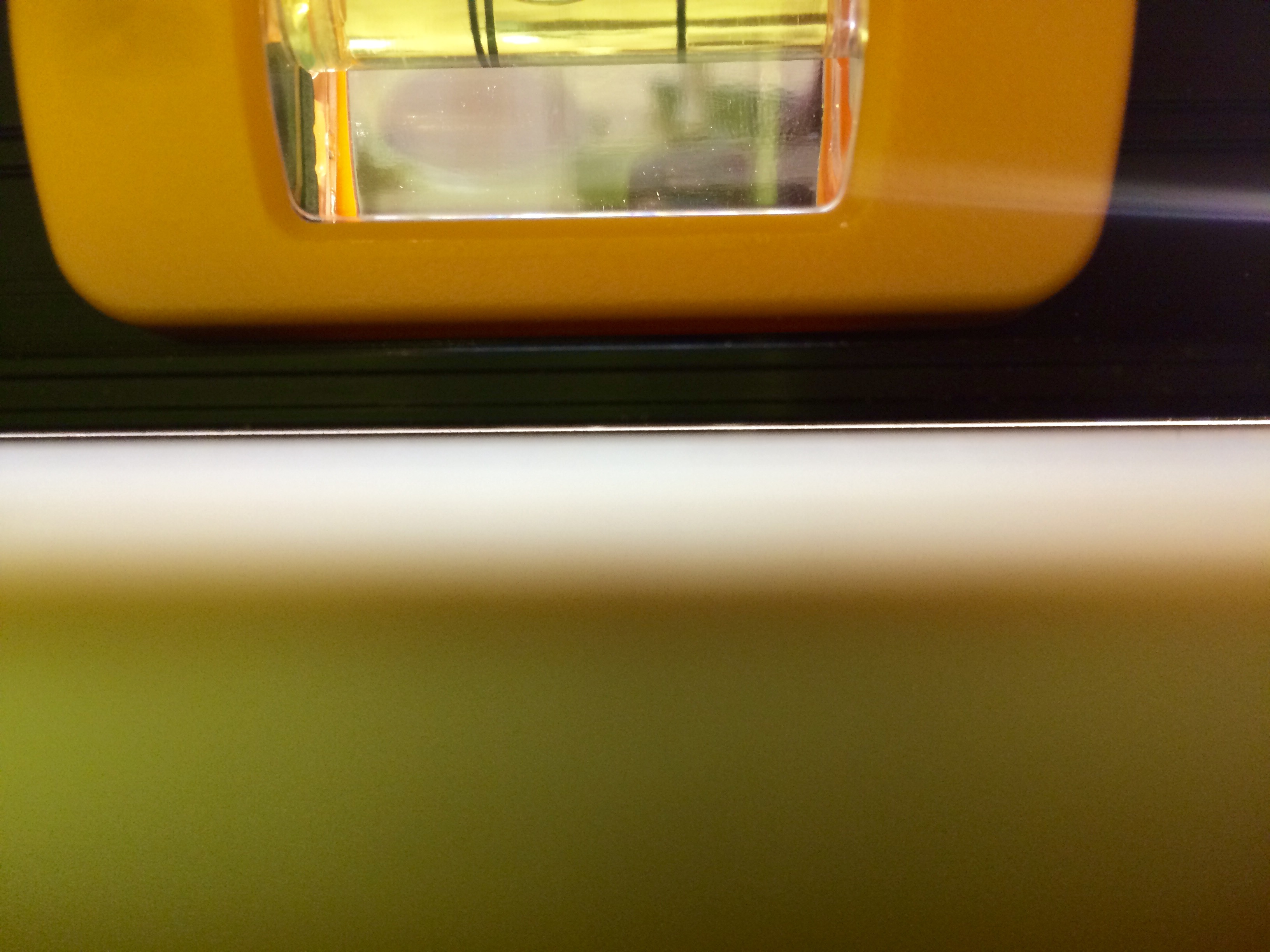
Check the Edge for Square Using a Jointed Face as Reference

Check the Edge for Square Using a Jointed Face as Reference

Avoid Your Low Marks

Avoid Your Low Marks

In my case, the board was square for the first 6 inches on one end, high on the right side throughout the middle, and high on the right side for the last 6 inches. Here is how my routine went.

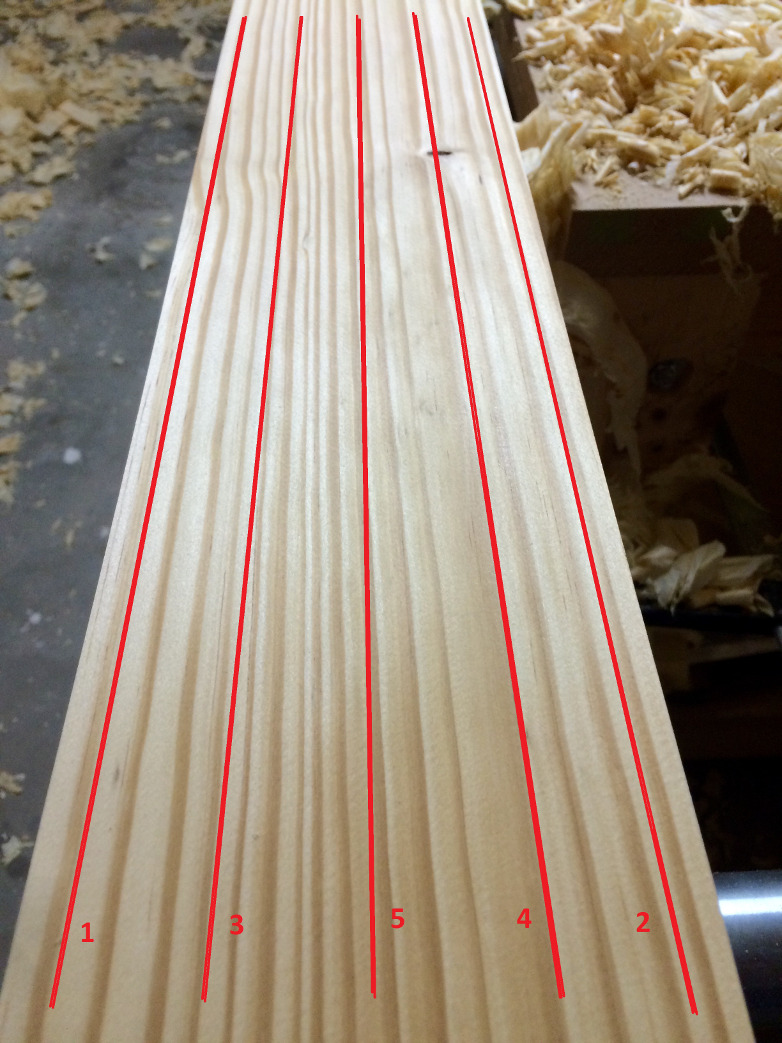
  1. Take a stopped shaving on the left side until I reach my low spot.
  2. Take another shaving on the left starting just after my low spot on the far end
  3. Take a stopped shaving on the right until I reach my low spot on the far end.
  4. Work my way towards the middle with full length shavings.
  5. Reassess the board and repeat
Don't Forget to Mark Your Jointed Edge

Don’t Forget to Mark Your Jointed Edge

Jointing wide edges sounds complicated, but I can assure you it’s not.  Just go slow and check your work frequently.  Don’t hesitate to ask any questions.  Feedback is welcome!

You can find links to my other Roubo posts here:  Project Index

Roubo Build: How to Joint Wide Edges Dead Square

Jointing the wide edges of the beams that will be used for the Roubo benchtop

Jointing the wide edges of the beams that will be used for the Roubo benchtop

Jointing wide edges can be tricky. Fortunately, I did my research. It was time consuming, but not difficult.  If I can do it, so can you.

Before you joint an edge it’s important that you establish a reference face that is flat, straight, and free of twist. I covered how I accomplished this here: Milling the large beams for the Roubo bench top

Once you’ve established a reference face, it’s important to assess the board.

  • What are the major defects?
  • Is there any significant bow along the length?
  • How out-of-square is the edge?

I don’t worry too much about minor cupping. This will be remedied, by running both sides through the planer.

Checking for straightness along the length of the beam

Checking for straightness along the length of the beam

In my case, there was some significant bowing. I measured about 1/16th of an inch in the middle of the board using a 48 inch straight edge. The edge was also significantly out of square. I chose to tackle the bow first. I removed the high-ends of the board by taking overlapping diagonal passes with my No. 7. When I was close, I started taking overlapping passes along the length of the board. Start from the outside and work your way towards the center of the board. I continued until there was less than 1/64th of error.

When jointing along the length, take overlapping passes starting from the outside

When jointing along the length, take overlapping passes starting from the outside

With the bow removed, I started working on getting the edge square to my reference face. I reassessed the board and mark the low spots with a pencil. Take a shaving from each edge, being careful to avoid your pencil marks. Then work your way inwards taking full-length shavings. Reassess the board every couple of passes. If you’re lucky, one side will be high for the entire length of the board.

Checking for squareness of the edge using the face as a reference

Checking for squareness of the edge using the face as a reference

Stop planing just before you reach your low marks

Stop planing just before you reach your low marks

In my case, the board was square for the first 6 inches on one end, high on the right side throughout the middle, and high on the right side for the last 6 inches. Here is how my routine went.

  1. Take a stopped shaving on the left side until I reach my low spot.
  2. Take another shaving on the left starting just after my low spot on the far end
  3. Take a stopped shaving on the right until I reach my low spot on the far end.
  4. Work my way towards the middle with full length shavings.
  5. Reassess the board and repeat
Mark out your edge with an arrow that points to your reference face once you achieve a square edge

Mark out your edge with an arrow that points to your reference face once you achieve a square edge

It sounds complicated, but I can assure you it’s not.  Just go slow and check your work frequently.  Don’t hesitate to ask any questions.  Feedback is welcome!

You can find links to my other Roubo posts here:  Project Index

Crap Wood for Good Workbenches

I think that anyone interested in building a Roubo should seriously consider yellow pine. I found this post from Christ Schwarz immensely useful in selecting the very best lumber from your local Borg. Build a great bench without breaking the bank.

You can find links to my other Roubo posts here:  Project Index

Roubo Design Update: What I Learned

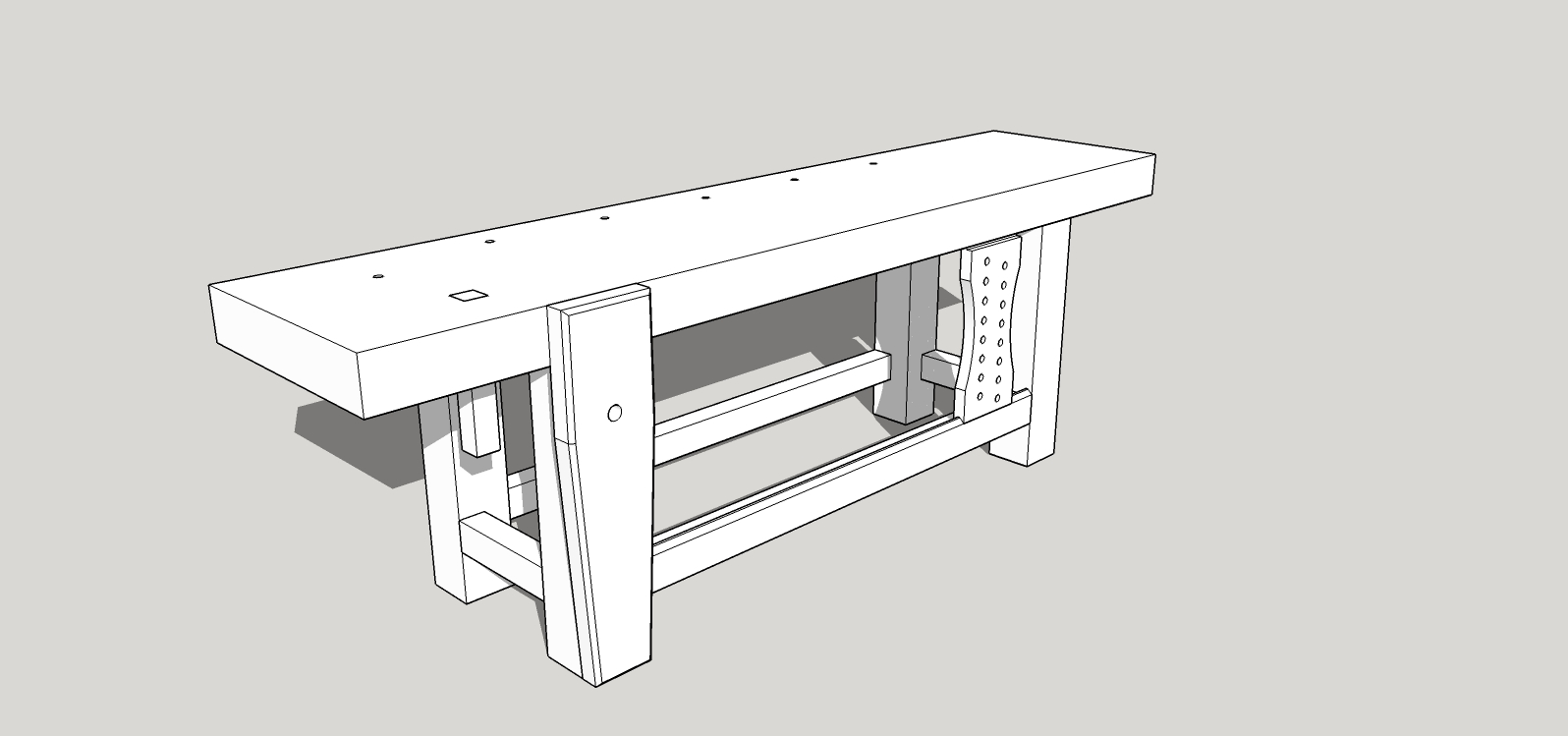
Roubo Sketchup

The design is complete.  The bench top might be taking longer than I’d like, but at least I was able to finalize the details.  Does anyone want to donate a powered jointer?

I had a few minutes over my lunch break, and was able to finish the sliding dead-man, bang out a vise chop, add a planing stop, and locate my hold-fast holes.  It might not seem like a lot, but here is what I learned.

  1. Planning out all of the details will help you work out problems you might not see otherwise.
  2. I don’t really need bench dogs or dog holes.  A planing stop will work better for me.
  3. I often joint long boards.  A sliding dead-man will make it easy to support long boards
  4. Thinking about how I work allowed me to plan out the location of hold-fast holes before I turned my bench top into Swiss cheese

Back to work.  I hope to have a completed bench top soon.

You can find links to my other Roubo posts here:  Project Index
A Marking Knife to Rule Them All

Czeck Edge Pattern Pilot

The Czeck Edge Pattern Pilot marking knife

The ability to accurately mark out stock is critical. Unfortunately, not all marking knives are created equal. I’ve been using the Pattern Pilot from Czeck Edge for a few months now and have grown to love it. It’s not perfect for every task, but it excels at those for which it was designed.

The Pattern Pilot has a 1-3/4″ long blade made from 0-1 tool steel. The tip forms a 65 degree spear-point from dual 40 degree bevels. The steel takes a very nice edge, and the blade is long and thin enough to fit into the tightest of places. The handle is turned from gorgeous cocobolo, and feels very nice in your hand. It quickly became my go-to tool for marking out dovetails.

The Pattern Pilot isn’t perfect for every task. For example, I prefer a knife with a shorter, more robust blade for marking across wide boards. My only other complaint is that honing these small spear-point blades is a chore. I think that is a skill that will improve with time.

Overall, the Pattern Pilot is joy to work with.  It excels at getting into tight places.  It’s comfortable to use and looks beautiful.

Using the Kell Honing Guide to Quickly Produce Keen Edges

Realizing that the Kell honing guide was a bit tricky to use effectively, I thought it would be good to write a follow up to my recent review, found here: A Review: The Kell Honing Guide

Using the Kell Honing Guide

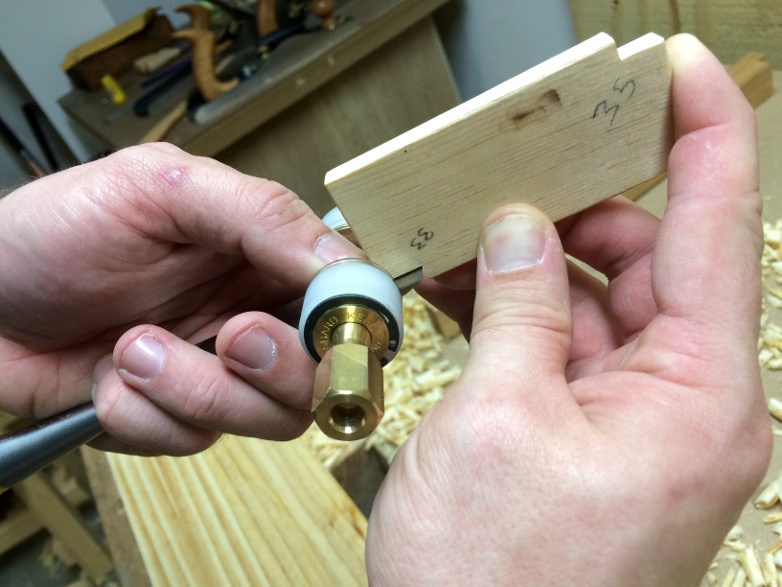
A registration jig makes setting honing angles a breeze

Using the Kell honing guide takes some getting used to, but is a breeze once you become acquainted.  The first thing to note is that making a registration jig will make this tool much easier to use. The instructions include a list of measurements to achieve a desired honing angle. The measurements are taken from the edge of the blade to the first registration bar. My registration jig is nothing more than a simple piece of scrap, slightly thinner than my narrowest chisel. This allows me to register the edge in one of two notches I cut, and slide the jig back until it touches the registration bar on the honing guide. Each notch represents a different honing angle.

Holding the Kell Guide with small chisels

Holding the Kell Guide with small chisels

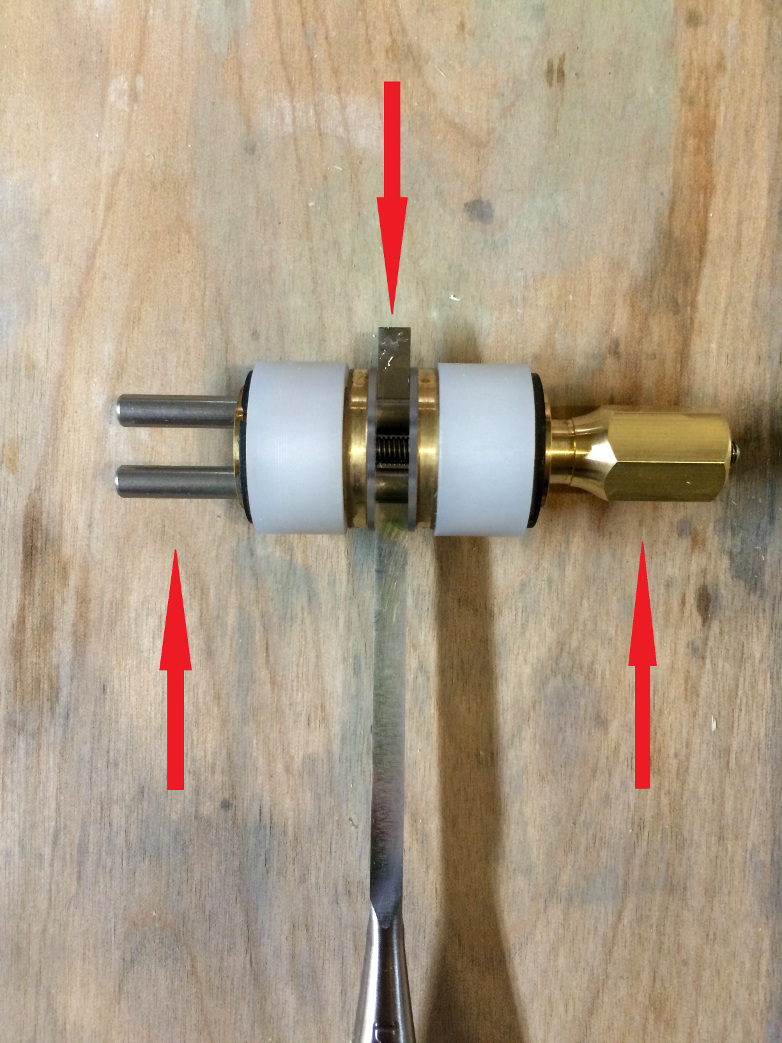
Red arrows indicate where to hold the Kell Guide

Red arrows indicate where to hold the Kell Guide

To hone my narrowest chisels, I am able to hold on to the end of the registration bars to the left, and the adjustment knob on the right. I apply pressure to the edge using on finger and draw the entire guide back.

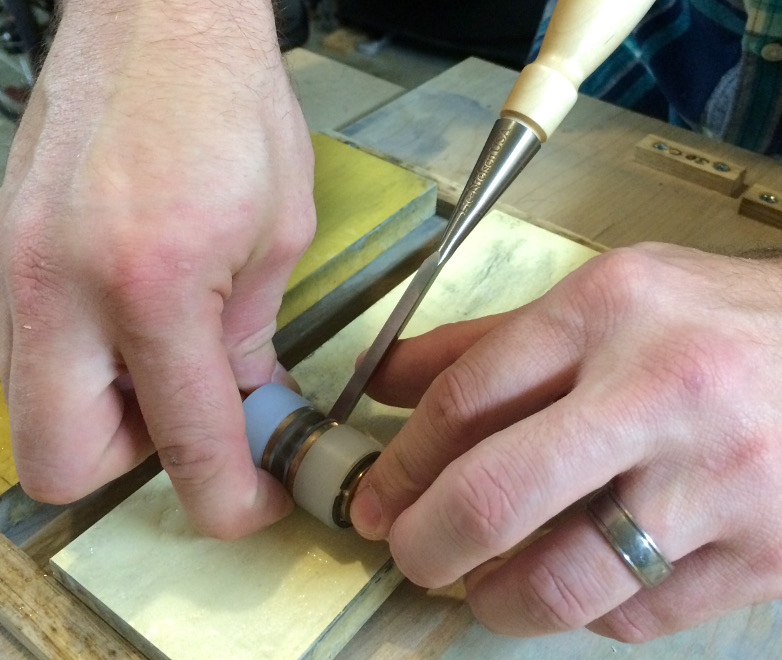
Holding the Kell Guide for large chisels

Holding the Kell Guide for large chisels

Red arrows indicate where to hold the chisel

Red arrows indicate where to hold the chisel

On my widest chisels, the registration bars aren’t available to grasp. Instead, I apply pressure to the edge with my index fingers, and pressure to the back of the blade (just above and behind the honing guide) with my thumbs. This locks the whole assembly in place, despite not really touching the guide itself. Chisels in between, are even easier to deal with.

I didn’t find it too difficult to get used to these modified techniques and would still highly recommend the Kell honing guide for chisels.  It may look odd to hold in the pictures, but it is actually quick, easy, and comfortable.  In both cases, I simply draw the guide back towards myself.  I lift sightly on the return to prevent gouging.  In most cases it only takes 10 or so swipes to produce a burr.  This, in part, is owed to the fact that the Kell guide makes it easy to produce consistent swipes across the stone and holds the chisel dead square.