Blood, Sweat, and Sawdust

Going against the grain

Jointing Long Edges by Hand

fullsizerender

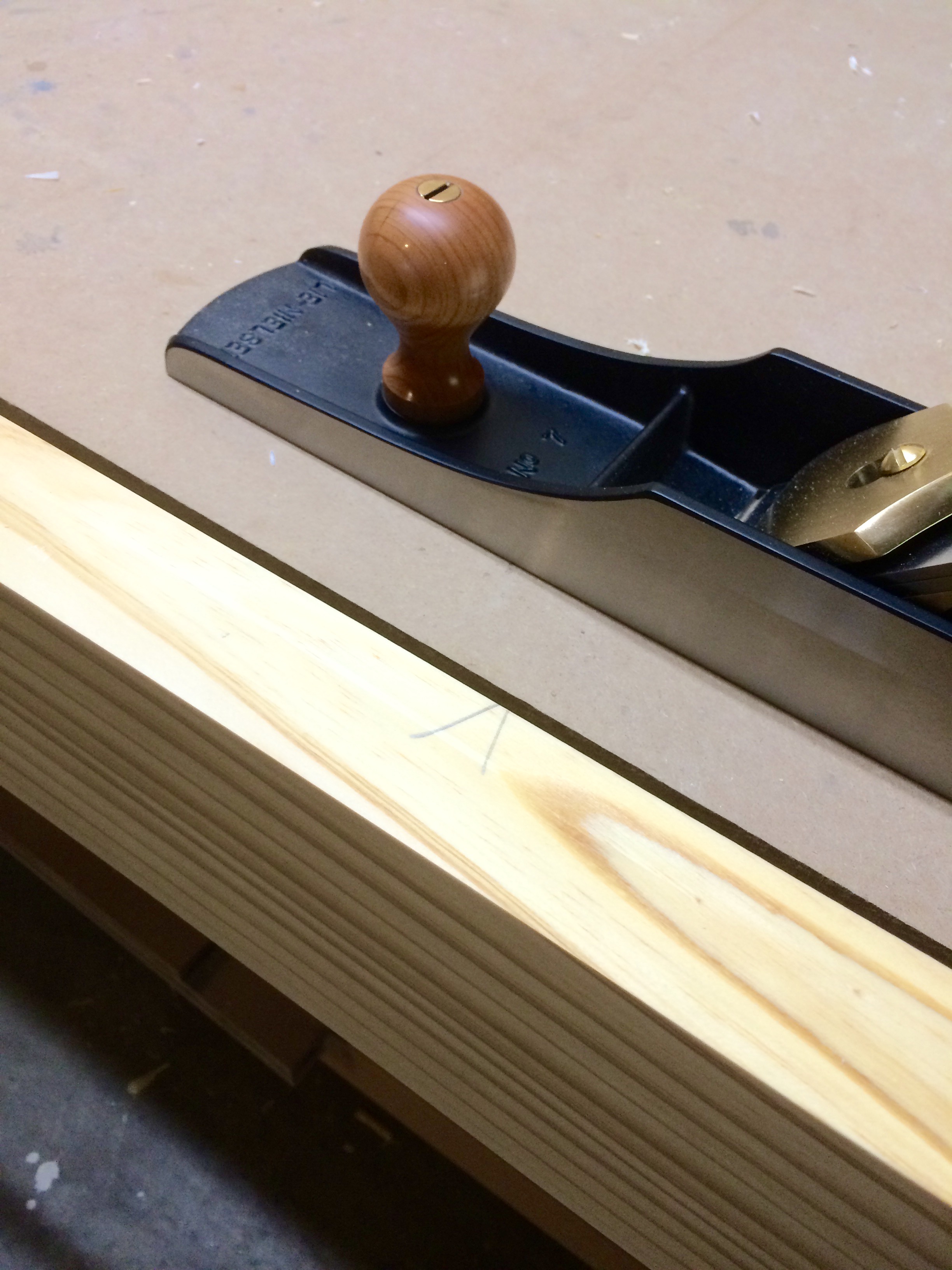
Jointing long edges by hand ended up being a little more work than I expected. Yellow pine planes nicely, but it’s resinous nature creates a lot of friction. It also required spending a little extra time cleaning my tools free of the resin.

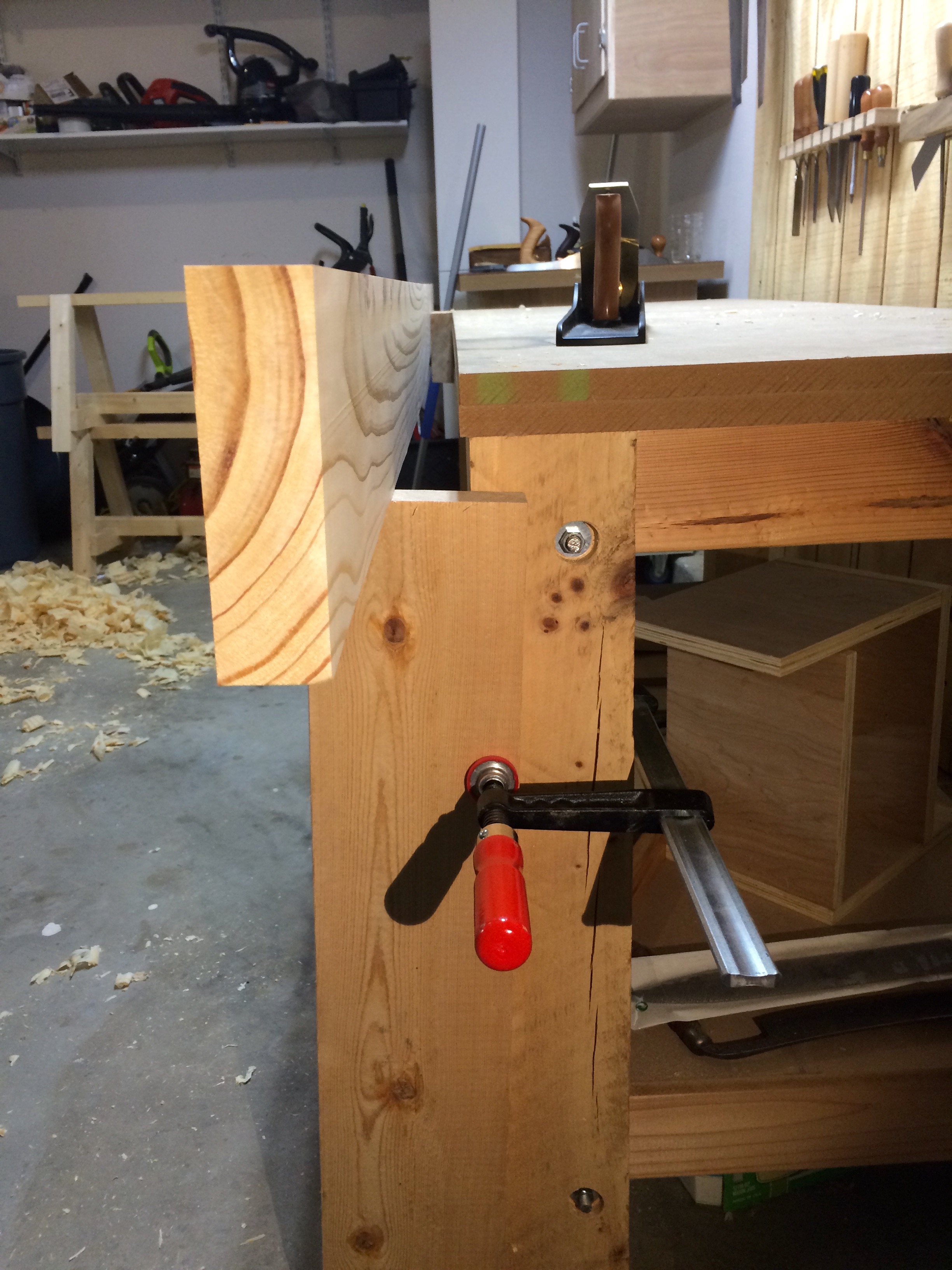
My current workbench couldn’t support the long boards for edge jointing. I worked around this by cutting a scrap board to the approximate height of my vise and clamping that to the opposite leg. This allowed the other end of the board a place to rest.

fullsizerender2

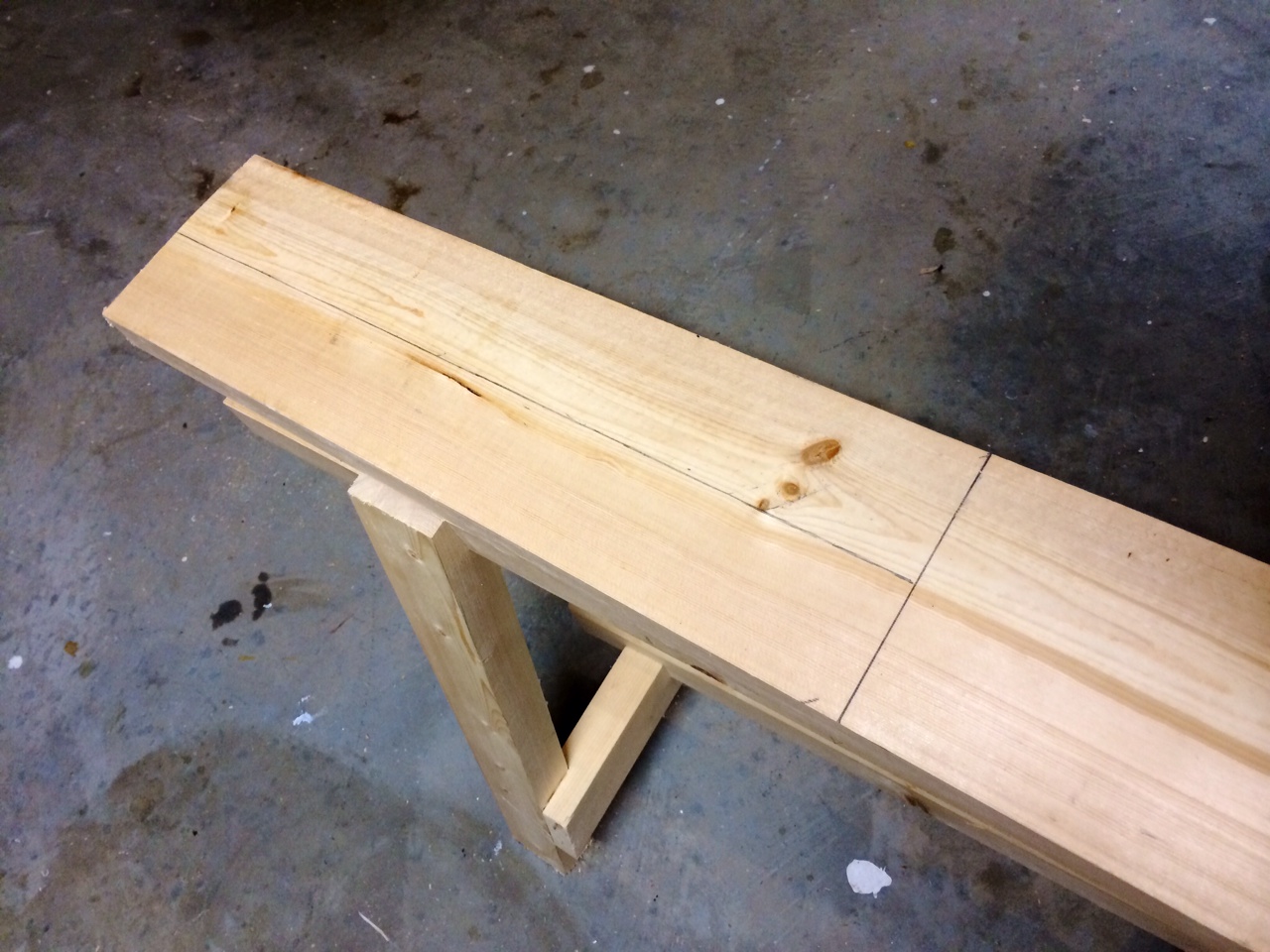
From there it was just a matter of ripping these boards to width on the band saw. These narrow boards gave much less fuss than the original 11″ wide boards. The resulting boards end up being nearly quartersawn. The board shown above was the worst of the bunch.  As a result there’s no need to joint the faces of these boards. I’ll just run both sides through the planer and glue them up.

Stay tuned.

You can find links to my other Roubo posts here:  Project Index

Jointing and Ripping

FullSizeRender

Jointing the long boards for the top ended up being a little more work than I expected. Yellow pine planes nicely, but it’s resinous nature creates a lot of friction. It also required spending a little extra time cleaning my tools free of the resin.

My current workbench couldn’t support the long boards for edge jointing. I worked around this by cutting a scrap board to the approximate height of my vise and clamping that to the opposite leg. This allowed the other end of the board a place to rest.

FullSizeRender2

From there it was just a matter of ripping these boards to width on the band saw. These narrow boards gave much less fuss than the original 11″ wide boards. The resulting boards end up being nearly quartersawn. The board shown above was the worst of the bunch.  As a result there’s no need to joint the faces of these boards. I’ll just run both sides through the planer and glue them up.

Stay tuned.

You can find links to my other Roubo posts here:  Project Index

The Tension Builds…

Ripped and stickered

Ripped and stickered

I decided to go ahead and rip all of my 2×12 stock in half to speed up the drying process. I knew there would be some tension built up in some of the boards, but a few of them where downright scary. I had one split for the last two feet of the board. This caused one half to slide off my roller stand. The back end kicked up and hit the blade guards fairly hard. No damage was done, but it gave me quite a scare. The split shifted the cut a few inches, making one have too narrow to use for my top. I’ll save this for my long stretchers.

I sorted and labeled all of my boards, saving the best for the front and back of the top. If you’re ripping construction lumber, keep a few extra roller stands handy. Also, be prepared to clean your tools free of pitch when you’re finished. You might even consider buying an extra band saw blade for this project.  Simple Green took care of the blade and a ruler scraped the tires free of debris.

You can find links to my other Roubo posts here:  Project Index

The Roubo Workbench Build

Roubo Workbench Sketchup

Roubo Workbench Sketchup

I’ve been very unhappy with my workbench for quite some time. The MDF top sags due to the weight of the vise. The top is too thin for holdfasts. And the work holding is generally subpar.

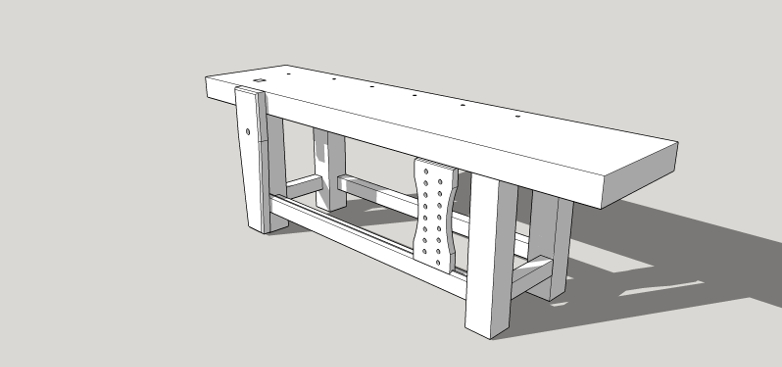
I’ve struggled over designs to the point of exhaustion. I eventually settled on the French Roubo with dovetailed through tenons as seen in infamous Plate 11. After much thought, I decided that building furniture was more important to me than a stunning workbench. I dropped the dovetails in favor of stub tenons. This will allow me to build the bench in significantly less time.

There is no desire for rock hard or exotic lumber here. I settled for cost-effective, Southern Yellow Pine. I had to sort through an entire stack of 2×12’s at the local Borg, but I was able to find enough suitable boards to supply an 8 ft long, 4″ thick top. This left me enough greenbacks in my budget for a Classic Bench Crafted leg vise.

Stay tuned!

Roubo Workbench Lumber

Lumber Haul

You can find links to my other posts regarding the Roubo build below:

Part 1: The Tension Builds

Part 2: Jointing and Ripping

Part 3: Lamination without Lamentation

Part 4: Sketchup to the Rescue

Part 5: Benchtop Lamination Followup

Part 6: Milling the Beams for the Top

Part 7: Sketchup Design Completion

Part 8: Jointing Wide Edges

Part 9: A Quick Roubo Build Update

Part 10: One Stout Bench Top

Part 11: She’s Got Legs

Part 12: Squaring End-Grain

Part 13: Cutting Tenons

Part 14: Chopping the Mortises

Part 15: The Stretchers

Part 16: Completing the Roubo Workbench Base

Part 17: Installing the Bench Crafted Leg vise

Part 18: Draw Boring Everything Together

Part 19: Dead-men Tell no Tales

Part 20: Making the Roubo Workbench Shelf

Part 21: Holdfast Holes

Part 22: Roubo Workbench Completion

Bonus: Crap Wood for Good Workbenches

Bonus: Jointing Wide Edges by Hand – Companion Video

Roubo Sketchup File

2015 Roubo Build

I’ve been very unhappy with my workbench for quite some time. The MDF top sags due to the weight of the vise. The top is too thin for holdfasts. And the work holding is generally subpar.

I’ve struggled over designs to the point of exhaustion. I eventually settled on the French Roubo with dovetailed through tenons as seen in infamous Plate 11. After much thought, I decided that building furniture was more important to me than a stunning workbench. I dropped the dovetails in favor of stub tenons. This will allow me to build the bench in significantly less time.

There is no desire for rock hard or exotic lumber here. I settled for cost-effective, Soutern Yellow Pine. I had to sort through an entire stack of 2×12’s at the local Borg, but I was able to find enough suitable boards to supply an 8 ft long, 4″ thick top. This left me enough greenbacks in my budget for a Classic Bench Crafted leg vise.

Stay tuned!

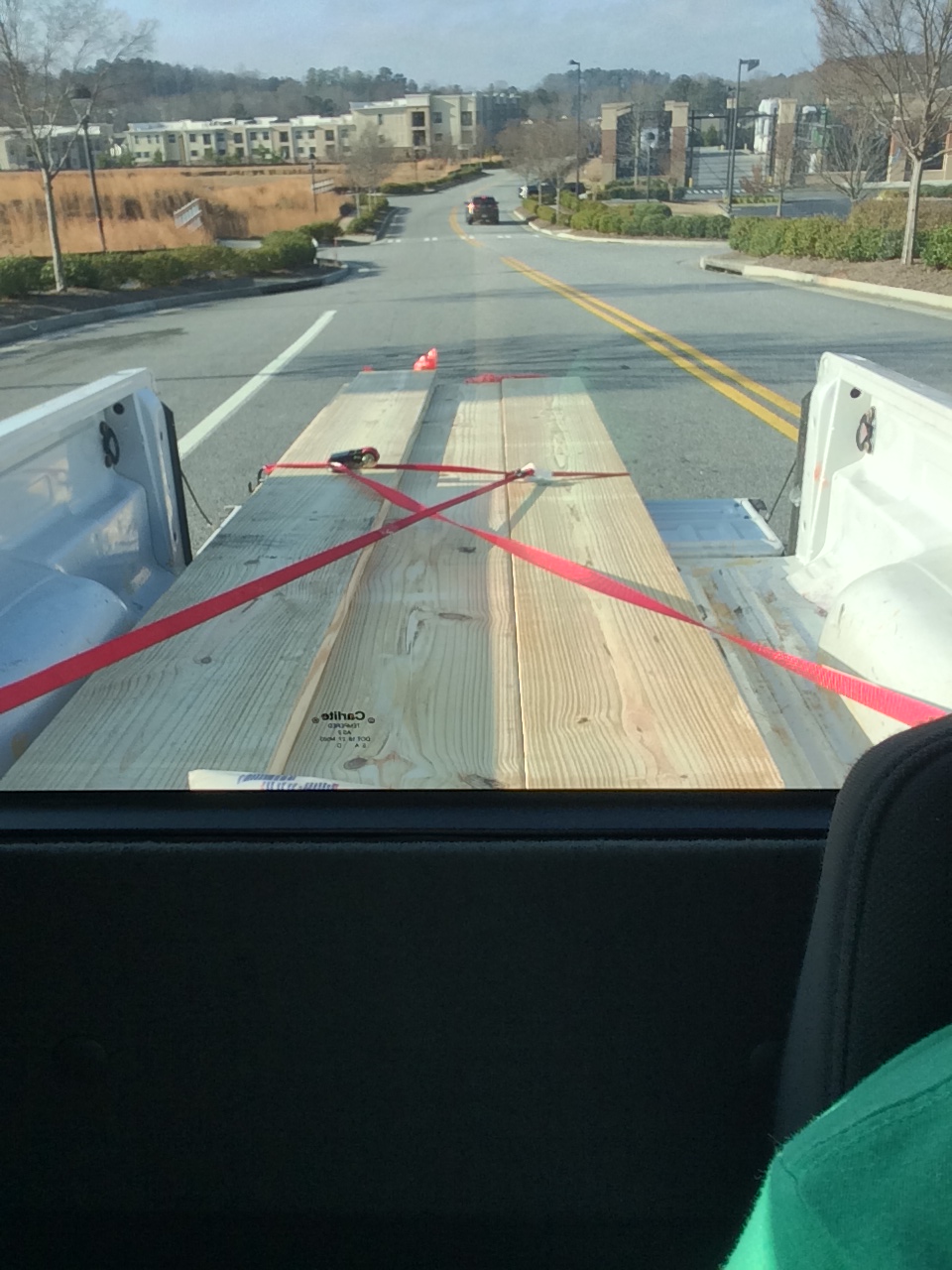
Hauling SYP

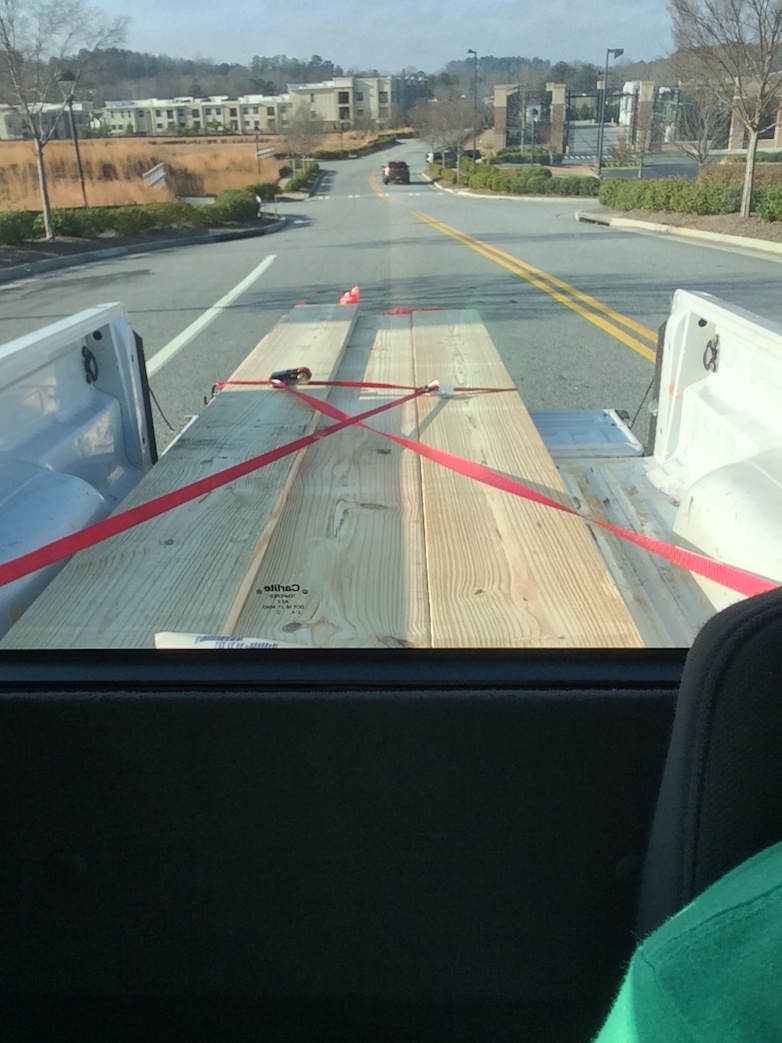
Hauling long, heavy boards in my short-bed pickup always makes me nervous

You can find links to my other posts regarding the Roubo build below:

Part 1: The Tension Builds

Part 2: Jointing and Ripping

Part 3: Lamination without Lamentation

Part 4: Sketchup to the Rescue

Part 5: Benchtop Lamination Followup

Part 6: Milling the Beams for the Top

Part 7: Sketchup Design Completion

Part 8: Jointing Wide Edges

Part 9: A Quick Roubo Build Update

Part 10: When Things Come Together

Bonus: Crap Wood for Good Workbenches

Bonus: Jointing Wide Edges by Hand: Companion Video

Milling By Hand: Rough Milling


photo 3
Milling lumber with hand tools can be broken down into two distinct processes : rough milling and fine milling.  Today, I want to walk you through the process of rough milling a board by hand.  This is typically accomplished with hand saws and will prepare a board to be finished 4-square with hand planes.  It isn’t until a board is properly 4-square that it is ready for joinery.

photo 1
The process starts by roughly laying out your dimensions on the board using pencil or chalk.  You should allow for margins based on your skill level. I usually allow for about 1/16th – 1/8th depending on the board’s condition.  It’s better to leave too much, than too little.  There’s nothing more frustrating than scrapping an entire piece, because of a small error.  The goal is to make as few cuts as possible, so mark out your lines wisely.  For example, combine parts with similar lengths. 


Crosscutting Ergonomics

Crosscutting Ergonomics

Ripping Ergonomics

Ripping Ergonomics

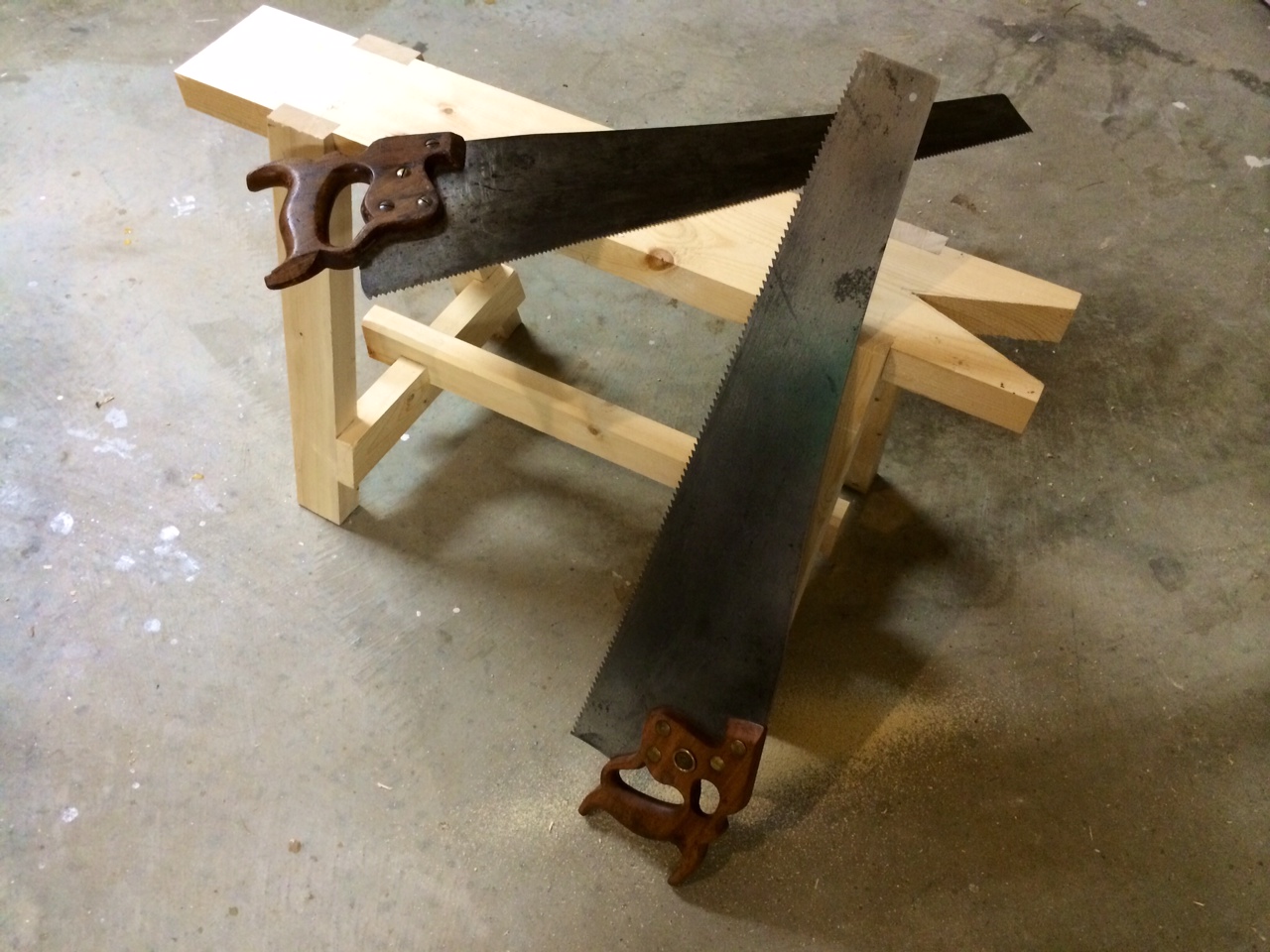
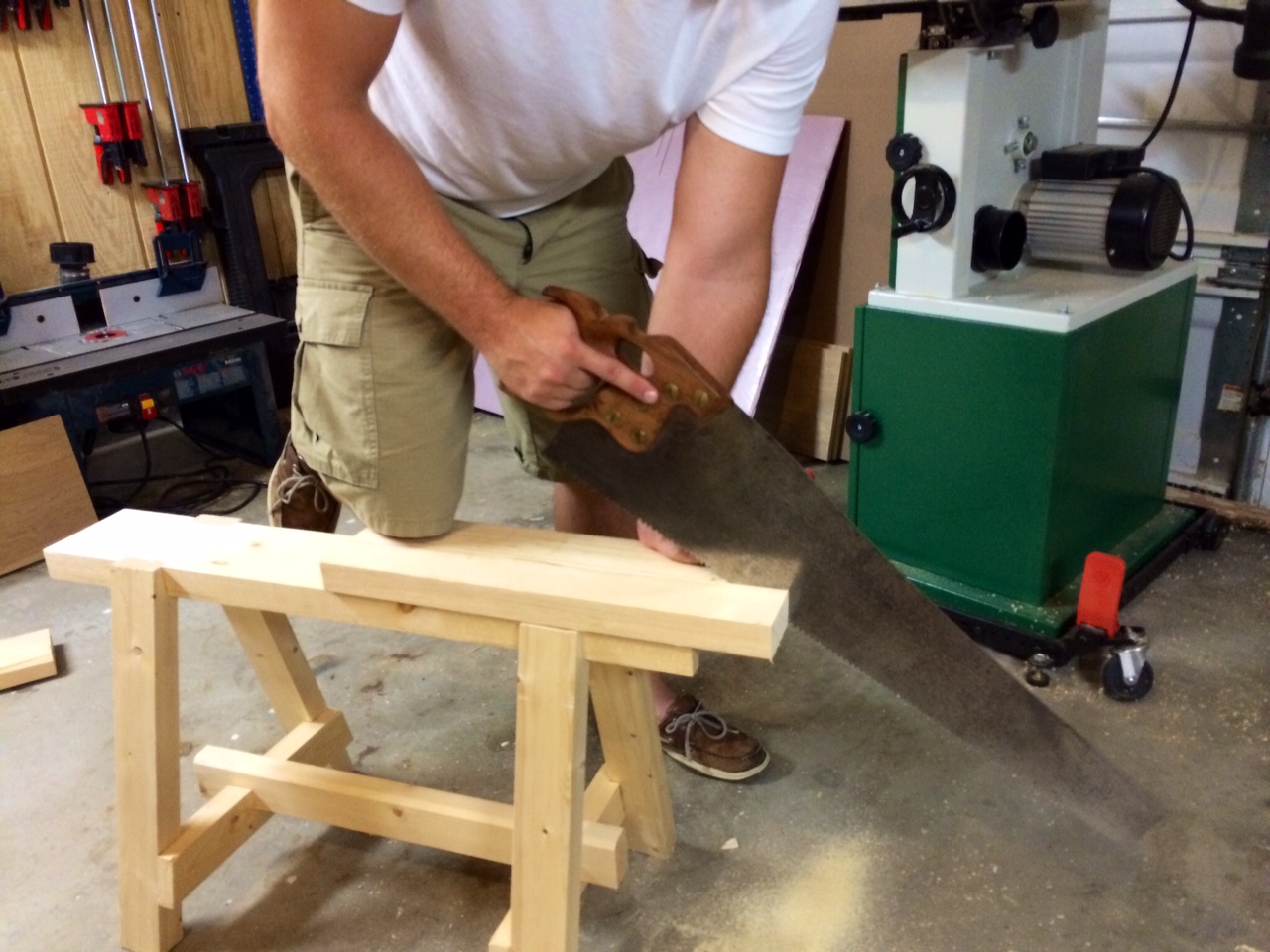
Once you have your lines marked out, proceed to milling.  I start by crosscutting any lines that extend the width of the original board.  From there, I rip my boards to width.  Ergonomics are key to doing this efficiently.  If you don’t already have one, I recommend building a traditional saw horse.  This will allow you to use your body to hold your work piece and sets you up to make efficient, accurate cuts.  Before cutting, always make sure that your elbow is free from obstructions.  Don’t overgrip the handle and concentrate on making a straight line from your shoulder, to elbow, to wrist.
Once you’ve sawed your parts, check the straightness and squareness of your cuts.  This can be used as a guide for future operations when planning how much margin to leave.  The best way to improve your performance, is to practice regularly.  I have prepared a list of helpful tips below:
1) Always support your offcuts when crosscutting so the weight of the off cut doesn’t breakout on the backside of the cut.
2) I find that crosscutting roughly 45 degrees and ripping roughly 60 degrees relative to the face of the board is most efficient
3) When ripping long pieces, you can correct your cut by lowering the saw and gently applying lateral pressure to the saw handle in the direction of your line.  Be careful not to over correct.

Always support your offcuts

Always support your offcuts

Sharpening: Honing Your Skills

photo 1

The most critical part of sharpening is the honing process. This is where an abrasive is used to bring an edge to a theoretical, zero radius. A mirror polish is secondary. The details of how you get there, aren’t important. What is important is that you get there quickly and efficiently. For example, I recently switched from using a fancy honing guide to a cheap pinnacle style guide. This has greatly simplified setup and reduced the overall time I spend sharpening. The change was a revelation. Just create yourself a series of stop blocks for commonly used angles and you’re ready to go. It’s so easy that I don’t really see much advantage to honing freehand.
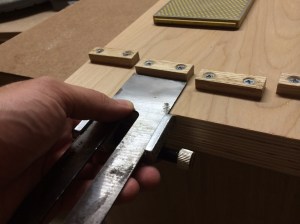
photo 2

The angle at which you choose to hone, will depend on the work being done. For general use, I hone to 30 degrees. If I were primarily paring, I might choose 25 degrees. Chopping and mortising might benefit from the durability of a 32-35 degree edge. I like to keep things as simple as possible, so I currently only use two stones: a 1000-grit Shapton and 15000-grit Shapton. The large jump between grits hasn’t been an issue for me yet. The extra time spent at the 15000 is offset by the time not spent at intermediary grits.
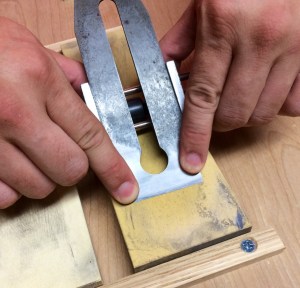
photo 4

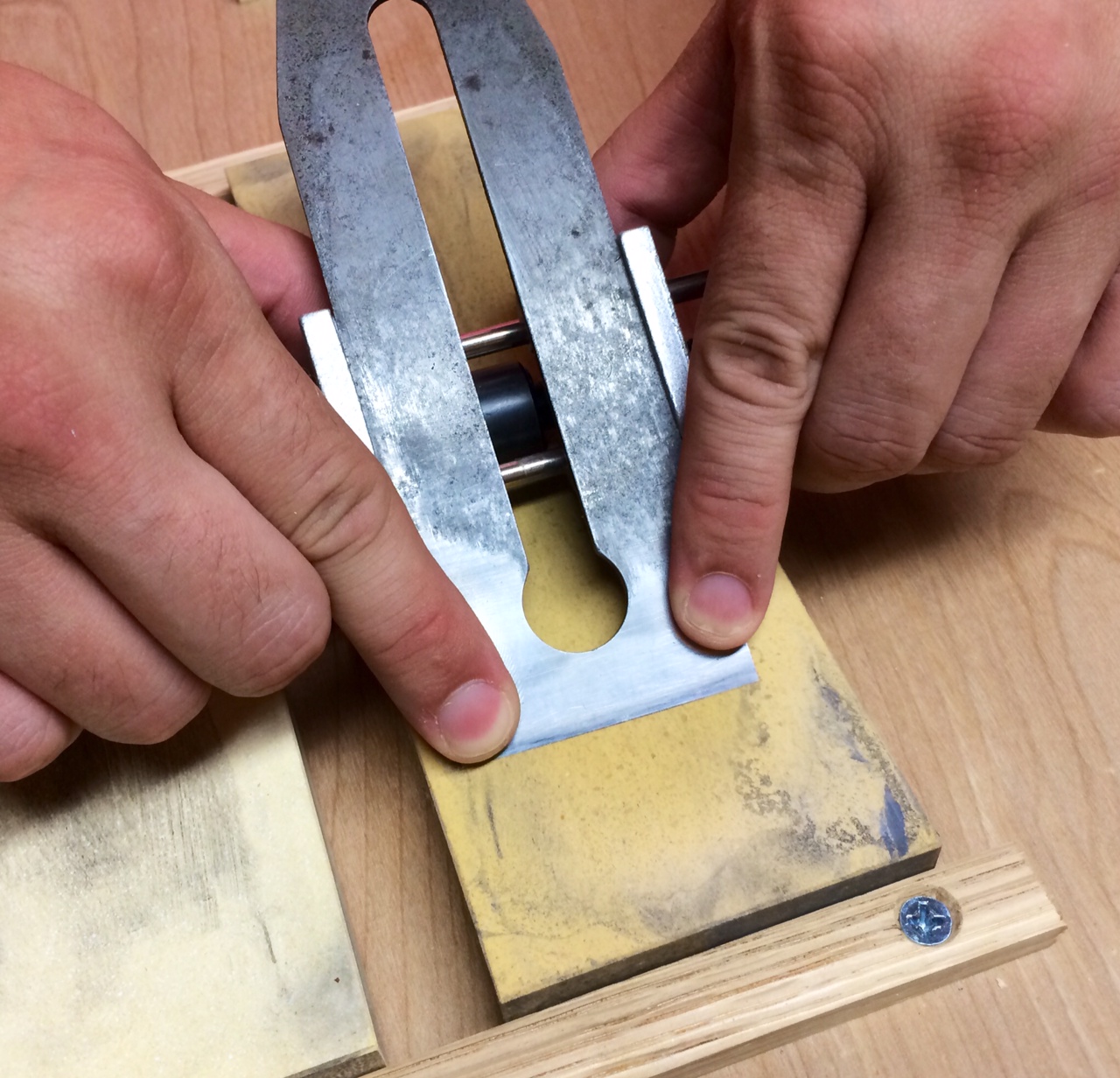
I start by securing my blade in the guide at the desired angle. I wipe down the edge and guide wheel, and proceed to my first stone. The Shapton’s only need a quick spritz of water on the surface and they are ready to go. I like to place my thumbs on the rear of the guide and my index fingers on the corners of the blade. It’s important to maintain consistent pressure between fingers. From there, it’s just a matter of drawing your guide back and forth across the stone until a burr is raised along the entire width of the edge.

You want to keep your secondary bevel as small as possible to reduce the amount of effort required to hone your edge. Therefore, I only continue until a burr is formed along the entire edge. With a 1000-grit stone, you should be able to feel this with your fingertip or fingernail. Don’t be tempted to remove the burr by hand.

If it’s taking too long to raise a burr, evaluate the primary bevel. One common problem is that the angle of the primary bevel is too close to the angle of the secondary bevel. Another common problem is leaving to large of a flat area after repairing a damaged edge.

Once you’ve successfully raised a burr, wipe off your edge and the wheel of your guide to prevent contaminating your next stone.
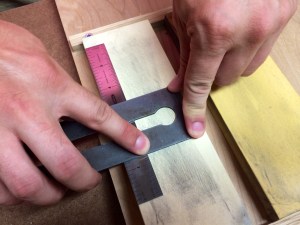
photo 5

I begin on my fine stone by removing the burr from the back side of my blade. Then, I repeat the same process I used on my coarse stone. I find that it usually only takes me 10-20 swipes to remove the scratches from the previous stone. A burr will form, but it can be very difficult to detect at this stage. I end the process by removing the blade from the guide and giving the back a few quick swipes. If I’m sharpening a chisel, I leave it flat on the stone. If I am working with a plane iron, I might use the ruler trick. Once finished, I test the blade for sharpness.
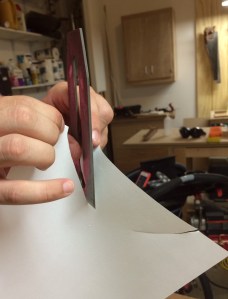
photo 3

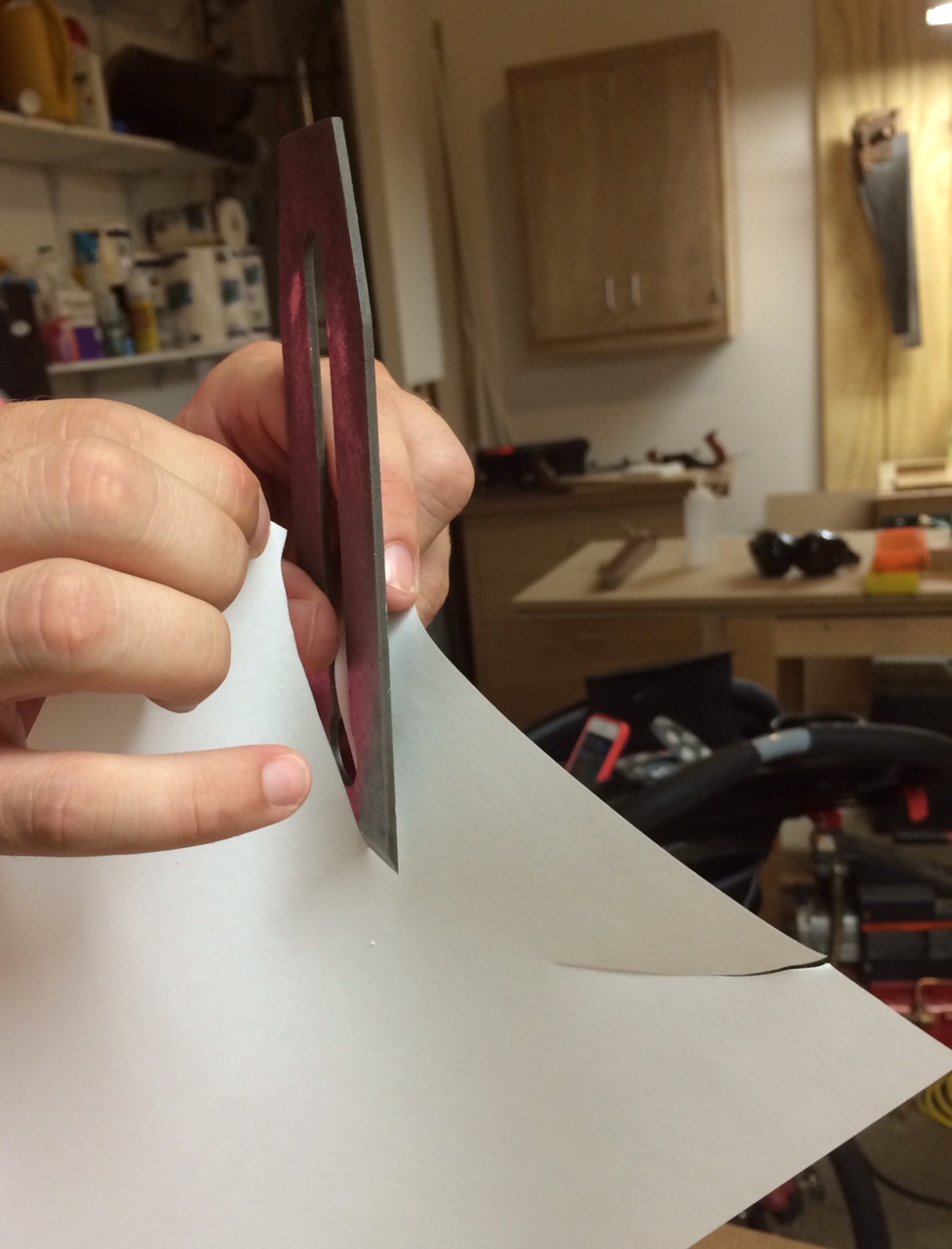
There are many quick and easy ways to test for sharpness. A sharp blade should easily slice a piece of paper with little more pressure than the weight of the blade. I sometimes test on the back of my thumbnail. A sharp blade will easily catch on the back of my nail under its own weight. Don’t forget to test the entire width of the blade. Carefully running the blade across the tip of my nail will quickly reveal any dull spots.

Don’t hesitate too long to rehone.  A slightly dull blade takes much less time to hone than a really dull blade.  Happy sharpening!

Sharpening: Regrinding a Bevel

securedownload-2

Keeping your tools sharp is paramount to enjoying the time you spend in your shop working wood.  This is even more important to those of us who have limited time to spend in the shop.  If you’re like me, you enjoy building furniture more than you enjoy sharpening your tools.  The best way to minimize the time you spend maintaining your tools is to have a solid game plan and become as efficient as possible.  The only way I know to accomplish this is through practice.

For me, the first step in the process is determining whether a tool needs to have its primary bevel reground, and that is the topic that I want to explore today.  Whether from edge damage or a secondary bevel that’s grown too large, you’ll eventually want to regrind your bevels.  I find that the quickest way to do this is with a hollow grind using a benchl grinder.  Below I will describe the process that I use on my 8″ low speed grinder.

securedownload-3

Here, I have determined that the edge of this chisel is damaged and no longer square.  I start by using a square and a sharpie to mark a reference line just shy of the damaged area.

securedownload-4

securedownload-5

Next, I position my tool rest roughly perpendicular to the wheel and grind to my line.  This will leave a flat spot that is square to the sides of the blade.  Use a steady side to side motion until you reach your line.

securedownload-1

Once I have a square edge, I reposition the tool rest to the desired bevel angle and carefully grind until the flat area is almost gone.  For general work, I prefer a 25 degree primary bevel.  Keeping a small portion of the flat area makes it easier to avoid overheating which can remove the temper from the blade.  However, you don’t want to leave too much, or honing might become a chore.  If I were simply regrinding a dull edge, I would keep a sliver of the secondary bevel, as this also reduces the amount of time spent honing the edge.

Here are some key points to remember:

Always keep the tool square to the wheel unless creating a cambered blade is the desired result.

Apply consistent pressure to the tool when moving across the wheel.

Move your tool across the wheel at a steady speed.

Always dress your wheel before grinding.  I find that rounding the corners of the wheel slightly help with transitioning the blade across the wheel.

You’ll know you’re on the right track when you can consistently produce a new bevel that consists of a single facet across the entire face of the blade.  My next post will detail the honing process.

Handtool Basics

I’ve been meaning to spend more time developing my hand tool skills, and I thought it would be a great opportunity to write about the process. I find that the writing process helps me obtain a deeper understanding of the topic being discussed. Hopefully, it will provide insight to someone else along the way.

I plan to start with the basics and progress to more complicated tasks. I will include everything from sharpening and milling to joinery. I will detail my process and include lots of photos. My goal is to blog atleast one post per week regarding the topic. So, follow along and join in. I would love to hear your questions and suggestions.

Exterior Finishes

I’m always reluctant to finish exterior projects that go out to customers. The reason being that nothing lasts for ever in the harsh light of the sun. The amount of maintenance required is often far greater than the customer is willing to endure. Even the best marine varnishes might only last a year or two in direct sunlight.

In light of that, a recent customer requested that I finish a pair of Adirondack chairs. I did my homework and determined that Epifanes Marine Varnish was my best bet. Although expensive, It was easy to apply and includes some of the best UV inhibitors on the market. The results were excellent. The chairs look great and the customer was happy. Only time will tell how long the finish holds up. Fortunately for the customer, the chairs are mostly shaded throughout the day. Here are the results:

securedownload (1)

securedownload

I thinned the finish with normal mineral spirits, and thinned per the directions. I got better results with a foam brush, due to the thick nature of the finish. I ended up applying about 7 coats, lightly sanding between each.