Blood, Sweat, and Sawdust

Going against the grain

Garage Workshop Build: Paint and Trim

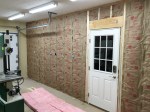
It’s finally starting to look like a real workshop.

After reading a few product reviews and tests, I settled on a paint and primer in one from Sherwin Williams.  In the past, I’ve always used the cheapest stuff I could find at the Borg.  Since the original paint had adhesion issues, I used something a little more high-end for the workshop.  I wasn’t let down.  The Sherwin Williams paint provided excellent sheen and coverage.  I believed I would need three coats on the bare drywall, but the guy at the paint store assured me that two would be enough.  He was right.

I’ve always hated painting, so I did a bit of research to make this as painless as possible.  I learned to cut in by hand, and properly roll on paint.  As a result, each coat only took me less than an hour (about 600 sq ft.).  My biggest piece of advice would be to drop the home improvement wisdom of rolling paint out in a “W” shape.  Roll straight up and down, starting at the center.  Then feather out the edges.  Also, use a high quality roll cage and roll cover.

I used PVC baseboard and molding for everything.  It’s a little pricey, but will hold up better to shop duties.  I still need to caulk the trim using a high quality, paintable caulk.

I finished the walls just in time, because I now have boxes for an air conditioner and Oneida dust collector taking up most of my floor space.

Stay tuned.

For the rest of the workshop build, check out the garage workshop build index.

Shop Update

IMG_2564

I spent the last few days getting the walls ready for paint.  It has taken more time than I initially expected.  Doesn’t everything?

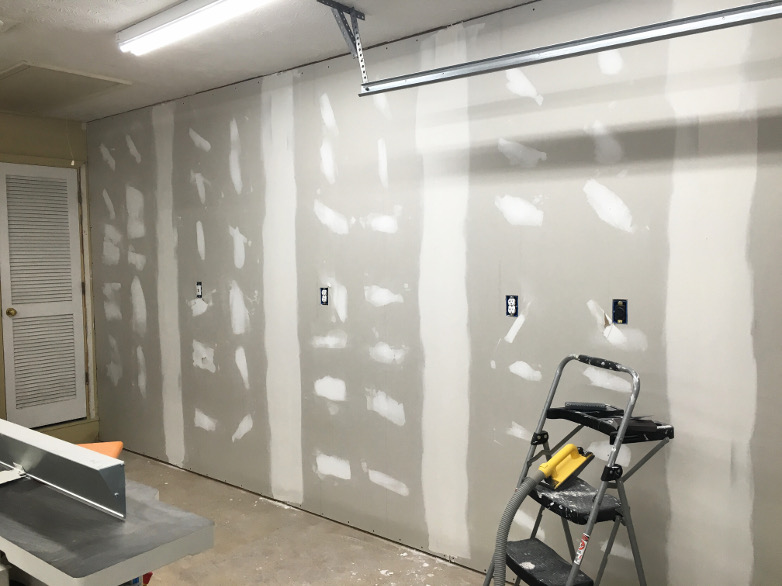
The paint on the two existing walls was in bad shape.  It was peeling badly at the bottom along the entire length.  I used a scraper to remove most of the easy stuff.  Then I sanded the edges down and mudded over the transition.  Now, all that’s left is to paint and trim out the room.  I should have that done by the end of the weekend.

It’s important that I get this done quickly, because I have a special delivery coming on Tuesday.  More on that later.

Oh, I also received my Mitsubishi Mr. Slim.  Good weather ahead.

IMG_2568

For the rest of the workshop build, check out the garage workshop build index.


Drywall for the Garage Workshop: Part 2

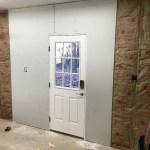
Completed Drywall

I am no drywall expert.  Many experienced professionals have detailed the process of taping and mudding.  So, I won’t go into too much detail about the process and techniques.  Instead, I will cover some of the lessons I learned doing this as a DIY homeowner.

A quick overview of my process

I pre-filled all of my large gaps with Sheetrock 90 bond.  Then, I embedded drywall tape in all of my edges and inside corners using general purpose mud.  At the same time, I lightly skimmed over all of my screw dimples and let the mud dry for 24 hours.  Then I filled in all the beveled seams with Sheetrock 90 bond, and let that cure for another 24 hours.  I gave everything a light sanding and finished up with a thin coat of general purpose.

Lessons learned

  1. Use the correct tools.  A narrow knife is perfect for embedding tape, but too narrow to feather out your mud on your final coats
  2. Mix your compounds thoroughly.  I failed to do this on one of my coats and it required extra sanding
  3. Learn the proper thickness for your compounds.  Too thick and it is hard too work.  To thin and it falls off your knife.  Filling gaps is easier with thick mud, but feathering edges on final coats requires thinner mud.
  4. Keep a bucket of water and a large sponge close by.  This is great for keeping your hands and tools clean.  It also allows you to quickly add a little water to your compound if it starts to dry out.

Now that they drywall is complete, I need to move quickly to trim and paint everything.  Stay tuned.

For the rest of the workshop build, check out the garage workshop build index.


Workshop Update: Patience

FullSizeRender12

Patience isn’t something I do well.

The weather isn’t cooperating, so I haven’t mudded the drywall.  I can’t paint until the drywall is complete.  I haven’t ordered air-conditioning because the paint isn’t complete.  The list goes on from there.

The forecast is looking better, but I have other commitments.  Fortunately, I have Monday off and the weather looks quite nice.  If all goes well, I will be able to make some headway.

In the meantime, I’ve been doing what I can: cleaning up, planning dust collection, etc.

Stay tuned.

For the rest of the workshop build, check out the garage workshop build index.


Drywall for the Garage Workshop: Part 1

This is my first time hanging drywall and it ain’t easy doing it by yourself.

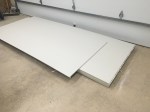
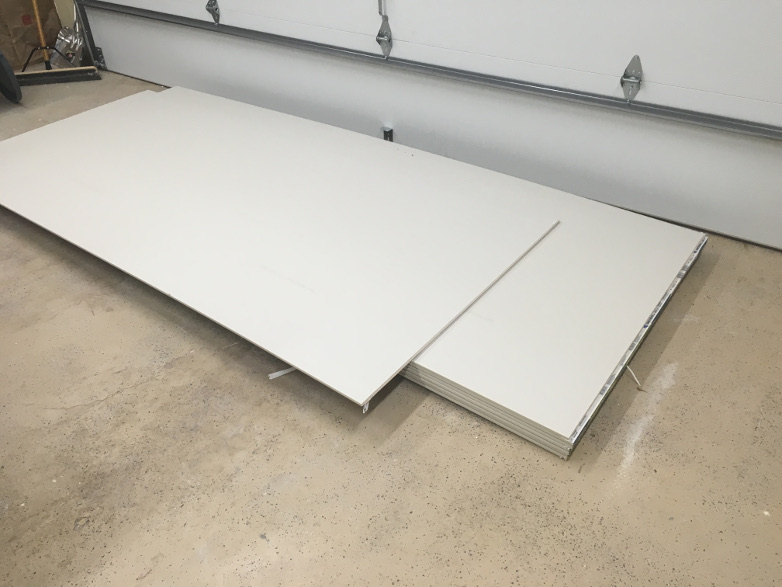
My ceilings are over 8 feet high.  So, I purchased 9′ sheets, and hung the drywall vertically.  This way, I will avoid as much necessary work as possible.  Now that I’ve hung 10 sheets all by myself, I have a few tips and lessons I’d like to share for the first time drywaller.

Use the Right Tools for the Job

If you were to buy only two tools for hanging drywall, I would suggest a good razor knife and drywall square.  The razor knife is pivotal for getting crisp lines and the drywall square makes cutting sheets to length easy.

The easiest way to do this, is to lay the sheet horizontally on the ground.  Hold the square against the top edge with your hand.  Use your foot to hold the bottom of the square against your sheet.  Now, just run your knife along the square and break at the cut.  With the break folded back, you can run your knife along the fold to release it.  Always cut from the show face of your sheet.

The other tool I found extremely useful was the drywall gun.  It looks like your average screw driver, but it has a few added features.  First, it uses an adjustable dimpler which prevents you from driving screws too deep.  You want your screws just below the paper.  The other important feature is that the head won’t engage until you put pressure on it.  This allows you to lock the trigger for speed and keeps you from stripping screws once they reach the desired depth.

I picked up the bare tool for just over $100.  Since I saved around $700 doing the job myself, this was an easy decision.  If you can’t afford the screw gun, invest in a set of cheap dimpler bits.  You can usually get four for just a few bucks.

A drywall saw and drywall rasp are also useful and inexpensive.

Measure Right Twice, and Cut Right Once

What good is measuring twice if you measure twice incorrectly?

Pay extra attention to the first sheet you hang.  You don’t want to have to trim a sheet after it’s already been cut to size.  Your sheets should butt together tightly.  A large gap can make it difficult to secure the edge of a sheet to the stud.  Be extra careful with your receptacle boxes.  Misplacing one, could ruin an entire sheet.

Minimize Work by Working Smart

I hung my drywall vertically, because this allowed me to maintain tapered edges for all of my seams.  Mudding and taping tapered edges is easier than butted edges.

Since I will run trim at the bottom of my walls, I maintained a half-inch gap.  I did this by using a piece of scrap to support each sheet when screwing them to the wall.  I was also able to use the scrap to measure the height of my electrical boxes.

Another great tip I discovered involved the drywall square.  I could measure the sides of each electrical box from the previous sheet and mark them on the square with a pencil.  Then I could transfer the measurement directly to the sheetrock.

With the sheetrock hung, I am looking forward to getting it all taped and mudded.  Stay tuned.

For the rest of the workshop build, check out the garage workshop build index.


Workshop Update

There haven’t been any large developments over the last week.  However, there have been several small ones.

With the help of my lovely wife, I hung my air filtration unit.  We almost died in the process, but we did get it up there.  It was difficult to see above the unit, and we accidentally knocked a couple of the s-hooks loose during the installation.

Air Filtration

After removing the old garage door opener, I discovered signs of arc-flashing on the ceiling receptacle.  I replaced the receptacle and added an extension cord reel.

Extension Reel

I added two additional soffit vents and may add a vent fan to the gable vent.

Soffit Vent

Oh, and the drywall arrived.  I’ve started hanging sheet rock and I’ve already learned a few tricks.  Stay tuned for the full write-up.

Drywall

For the rest of the workshop build, check out the garage workshop build index.

Garage Workshop Lighting

No more stubbed toes.  The workshop lighting is complete.

workshop lighting


I hung eight, dual-bulb fixtures for a total of sixteen T8 LED bulbs.  I wanted to secure the fixtures to the joists, but that wasn’t possible.  I secured the fixtures using several drywall anchors.  The drywall in the ceiling is 5/8th-inch thick and the fixture/bulb combo is very light.  This shouldn’t present a problem.

Placing the fixtures was straight forward.  I used some 1×3 scraps to evenly space each one.

There were two small fixtures in the garage when I inherited it.  I used these fixtures to tie in the new lights, and placed a cover over the opening of the old light box.  This light box is now my junction box.  It is difficult to take direct pictures of the layout, so see below.  I had to change my original layout due to the attic access stairway.   This will work better, because my only dark spot is an area that isn’t used for critical work.

I shot for 100 lumens per sq-ft, and I think I got close.  The new workshop lighting is bright and even.  I purchased all my lighting from www.beeslighting.com.  I highly recommend them.

Stay tuned for more of the workshop build.

For the rest of the workshop build, check out the garage workshop build index.


Insulating a Garage Workshop: Part I

The light at the end of the tunnel, finally!  My hands are a little sore from securing around 400 staples.  However, insulating a garage workshop was one of the easiest tasks I’ve completed so far.  I suggest you try this yourself as opposed to hiring it out.

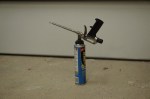
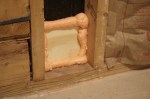
Before installing the batts, I sealed all the seams in the sheathing with spray foam.  I also patched a few large holes with plywood.  After struggling with the disposable cans, I opted for the professional gun.  It allows you to control the bead of foam with precision.  You’ll finish the job with cleaner hands.  I also sealed the gaps between the door jamb and frame.  Here, I used a low expanding foam specifically designed for windows and doors.

With the workshop air tight, it was time to install some insulation.

I cleaned off a large section of the floor for a work area and got to work.  I’m not too keen on being itchy, so I used some long gloves while working with the fiberglass.  I decided to use rolls on kraft-faced R13 installed of pre-cut batts.  I measured my stud bays and cut the rolls using a utility knife.  I found that compressing the roll over a 2×4 scrap made cutting in a single pass a breeze.  I used an engineering square to make sure my cuts were square.  I also used the story stick from when I ran electrical to score part way through the back of the insulation where I had horizontal cable runs.  You want your wires to fit into the insulation as opposed to compressing it.

I waited until my batts were installed before I cut out for my electrical boxes.  Then, I secured the batts to the studs using staples.  The rolls have flanges that fold out to make sure a continuous vapor barrier along your wall.  I overlapped the flanges and stapled.  And I stapled, and stapled.  My hands are still sore today.  I should have invested in one of the hammer style staple guns.

I still have to decide on what to cover the walls with.  I’ll probably go with 5/8 drywall.  Then it’s on to conditioning the space.  Stay tuned!

For the rest of the workshop build, check out the garage workshop build index.


Opening New Doors: Installing an Exterior Door

I started installing an exterior door several weeks ago.  However, bad weather and other projects sidelined me.  With the door installed, I couldn’t imagine the shop without it.

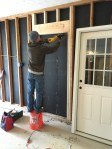
I completed the door framing about two weeks ago.  I purchased the door before getting started, so I could take measurements and test fit the door in the new opening.  I installed my jack-stud / king-stud combinations before removing any of the existing framing.  The gables run parallel to this section of the wall, so a temporary wall wasn’t necessary.  Still, I hurried to install the header and cripple studs.  I made the header ahead of time using two pieces of 2×10 and half-inch plywood.

Removing the old studs was the most difficult part of framing.  I couldn’t cut the old nails from behind the studs without destroying the sheathing.  I ended up cutting through the studs in several places with a reciprocating saw.  Then, I carefully pried them away from the wall.  The siding wasn’t in the best shape, so a few nails pulled all the way through.  More on this later.

With the framing complete, it was just a matter of cutting the opening and installing the door.  Rarely, are things this simple.  The discovery of some bad siding, resulted in hiring a professional to complete the job.

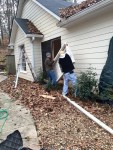
The crew started cutting the opening from the inside using the frame as a guide.  Then, the door is temporarily installed in the opening.  Using the brick-mold as a guide, they traced around the door frame with a pencil.  Then, they used the pencil marks as a guide to cut the siding, so that the brick mold sits flush with the wall.  We used Z-trim, flashing, and a ton of caulk to make sure the door is water tight.  The bad siding was replaced with Hardie Plank.

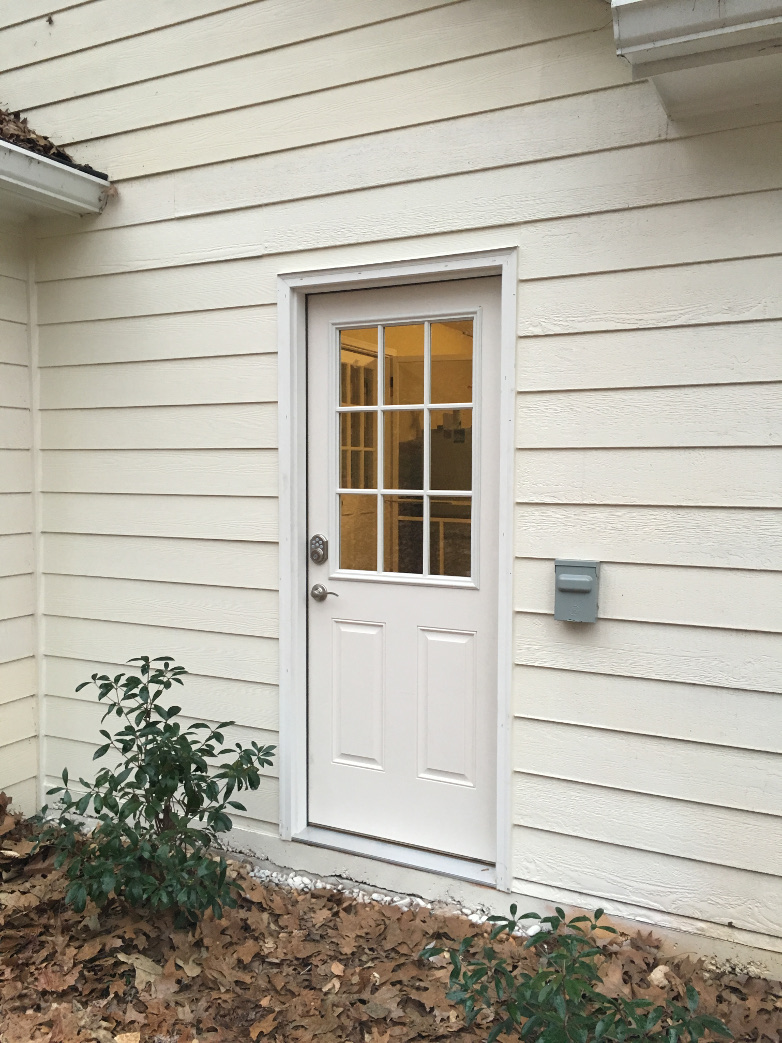
With the new door secured to the framing, I installed the lock-set and door-latch.  I decided to go with an electronic keypad dead-bolt.  The interior half of the lock was too wide and I had to trim some of the window molding with a razor.  Aside from that small hiccup, everything went well.

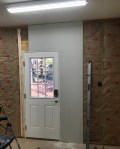
Exterior Door Complete

The natural light and easy access to the outside were well worth the effort.  Installing an exterior door isn’t usually difficult if you do your research.

Stay tuned.  The photos are courtesy of my beautiful wife Melissa.  Check her blog out at http://sewsassycreations.com/

For the rest of the workshop build, check out the garage workshop build index.


Power for the Shop: Workshop Electrical on a Budget

Garage Workshop Electrical

Houston, we have power!

The new garage workshop finally has real power.  I will never have enough outlets.  However, I did my best to ensure adequate coverage, while sticking to a budget.  I’m relatively proficient with residential electric, so I did most of the leg work to keep costs down.  Then, I hired an electrician to check my work, connect the breakers, and test the outlets.

I’ll share with you exactly what I did.  I hope this will help others proceeding along a similar path.

Warning: I am not a certified electrician.  Proceed at your own risk.  Consult your local code and a qualified professional before starting any workshop electrical projects!

First, I marked my box locations.  I planned this out earlier here: Workshop Planning

Then I made a story stick from a scrap 2×4.  I used this to mark the height of each box and my horizontal wire runs.  I planned the bottom of each box 50″ from the ground.  This will allow me to clear any benches and full-sized sheets of plywood laid against the wall.

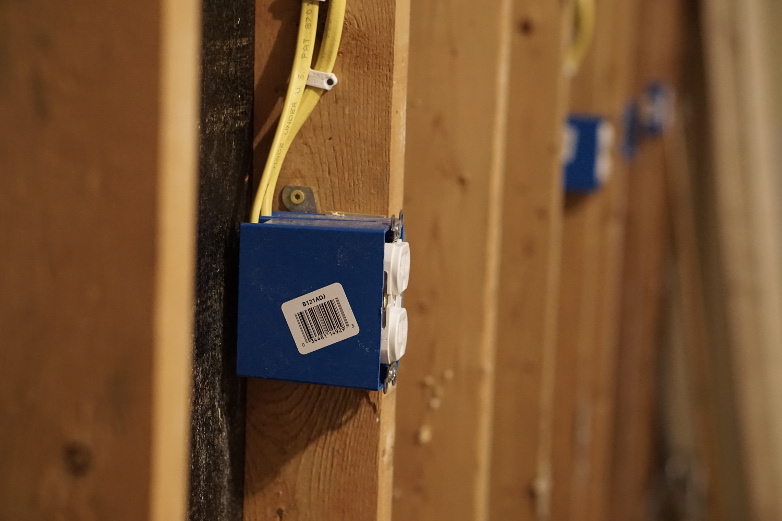
New Work Box-Web

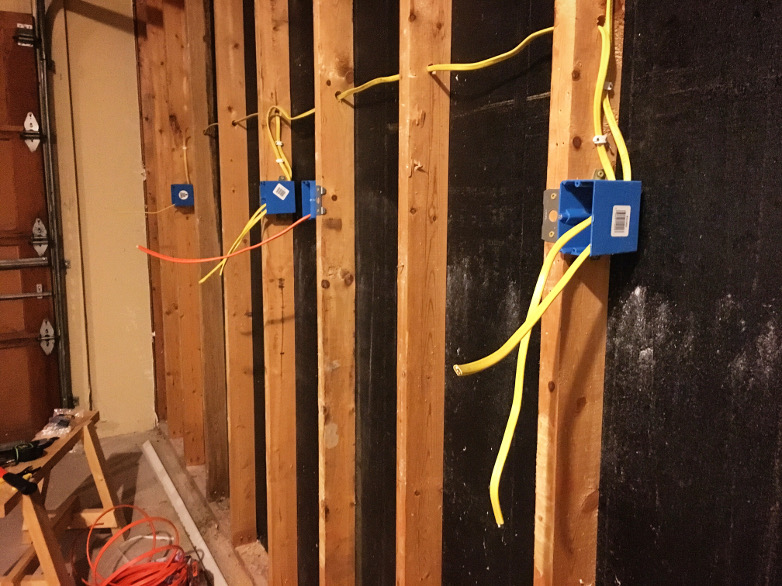
Once everything was laid out, I secured each of my boxes to the proper stud.  I used adjustable boxes.  This allows me to dial in the box perfectly once drywall is up.

Next, I drilled a 3/4″ hole through the studs using a cordless drill and an auger bit.  Finally, I drilled similar holes through to top plate to route the wiring through the attic.
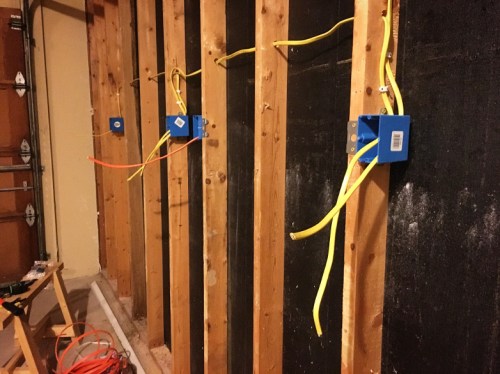
Electrical Rough Wiring

Staples-Web

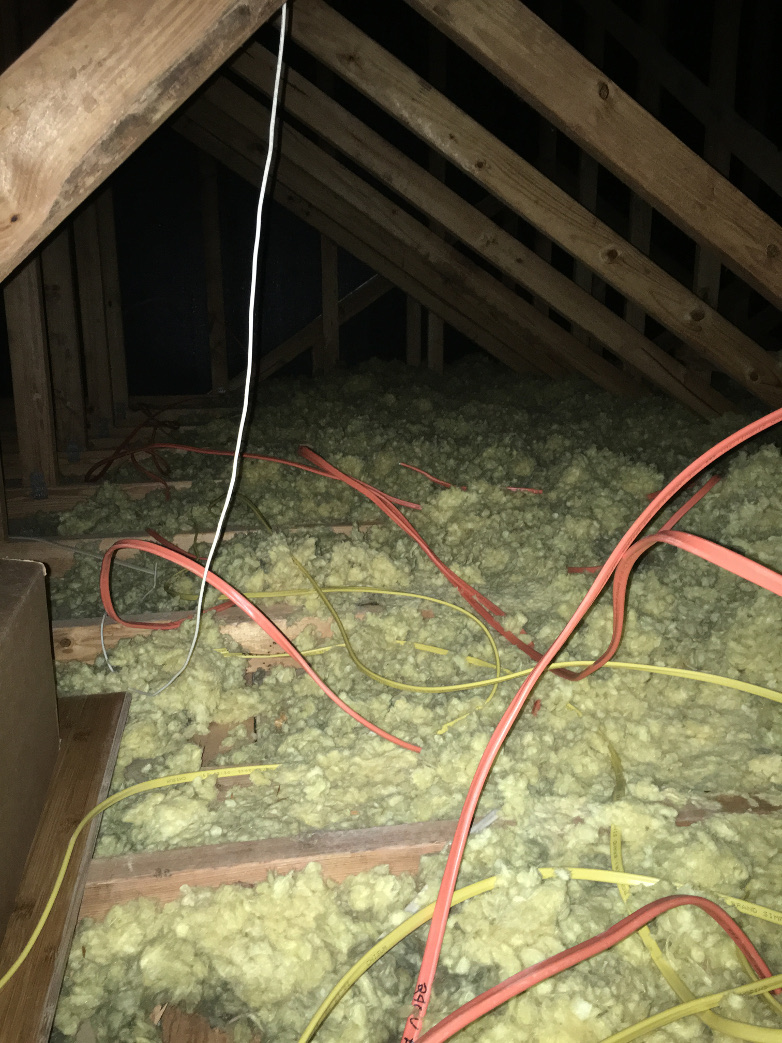
I pulled my horizontal wire, taking care to leave 12″ of extra cable at each box.  Then, I secured each wire using a staple within 12″ of the box and at least every 4.5′ after that.  Next, I began the arduous task of pulling wire through an attic filled with obstacles and engineered trusses.  Blech!

Rats Nest-Web

Running Wires Across Joists

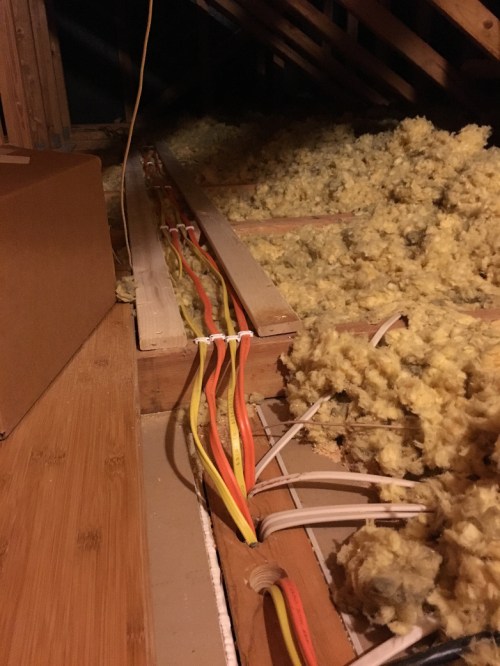
A good part of my runs through the attic are within 7 feet of the access ladder and perpendicular to the joists.  My local code requires that I make a raceway to protect the wires from be trampled on.  I used furring strips, but 2×4’s may have been better.  Straighten out as much of your wire as possible before pulling it into the attic.  Straightening 10/2 NMb wire in the attic is not fun!  I pulled 8 feet of extra wire for all of my circuits to give the electrician plenty of extra wire to work with.

Electrical Pigtails

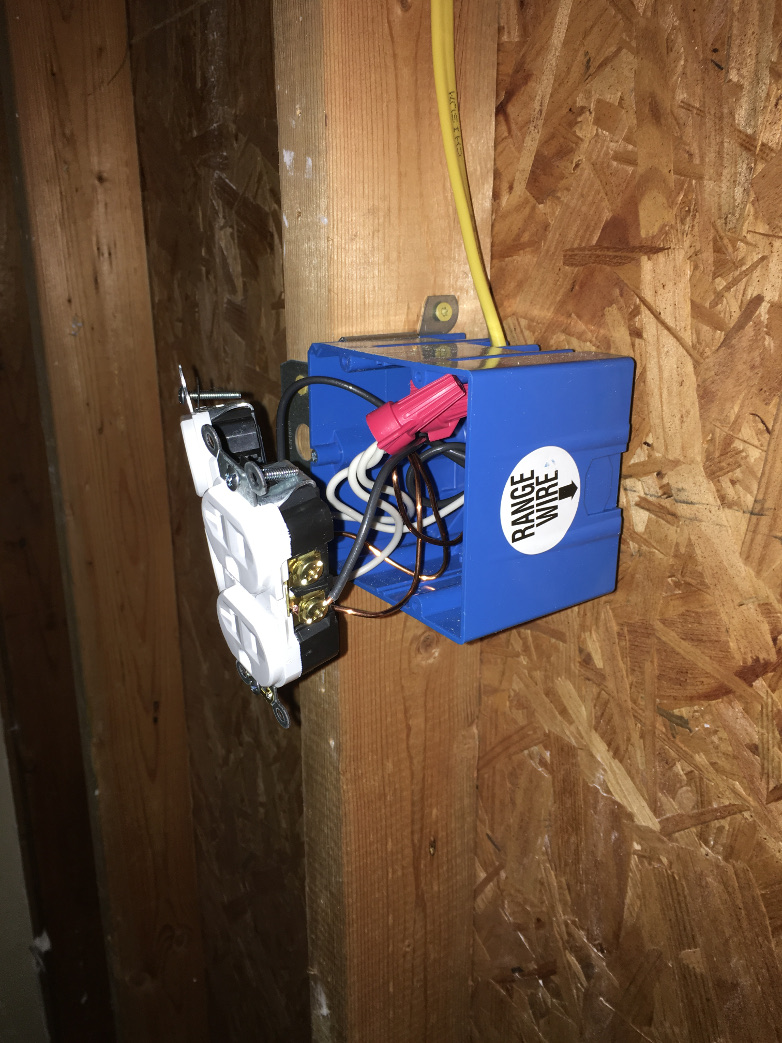
With the wires ran, I started making up my boxes.  First, I stripped off the wire jacket and removed the paper from the ground wire.  Leave about an inch of jacket remaining in the box.  Then, I stripped about 1″ of sheathing off each wire and made pigtails using scraps.

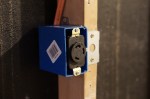
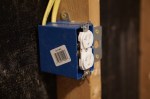
Double Duplex-Web

With the pigtails made, it was just a matter of connecting all of my outlets and securing them to the box.
Run to AC Disconnect-Web

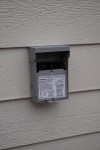
AC Disconnect Box

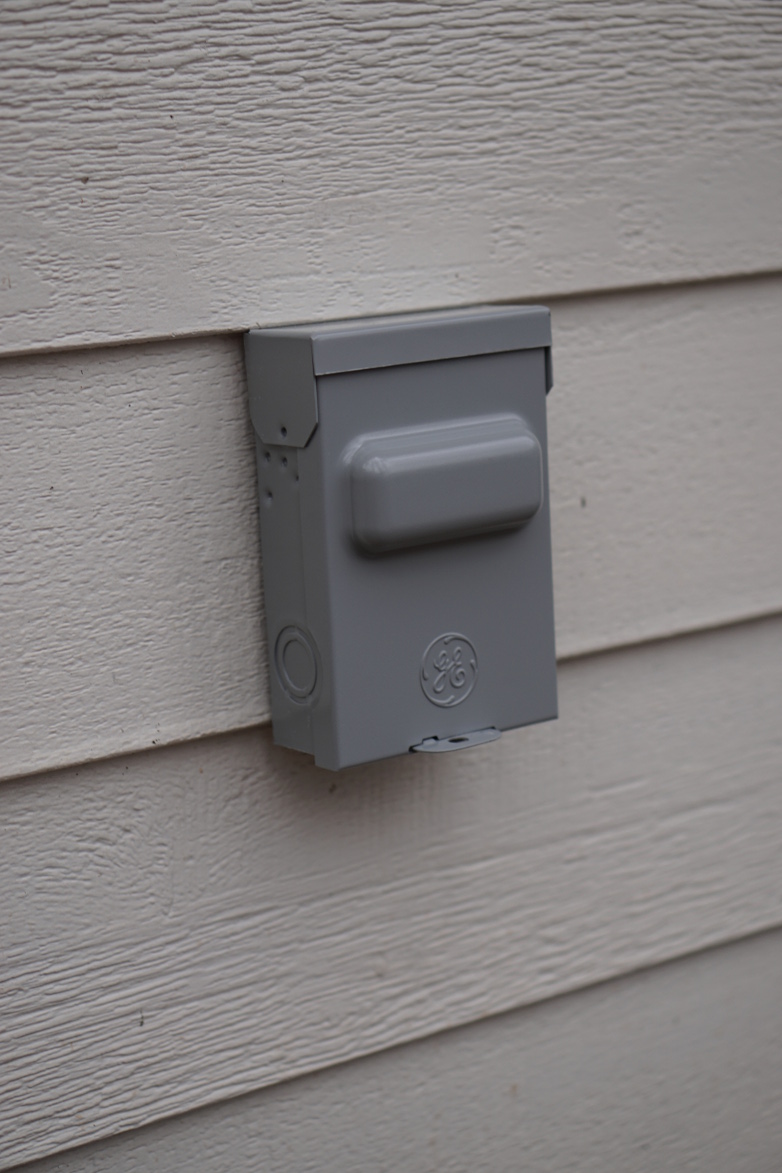
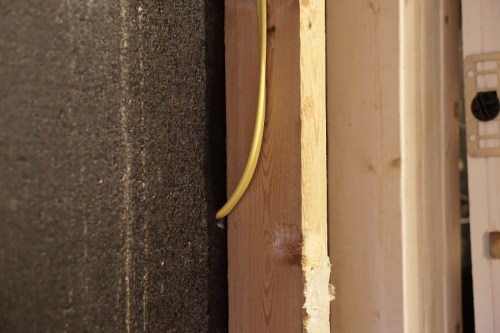
The last thing I did before calling the electrician, was connecting the AC disconnect box outside.  I secured the box directly to a stud and used duct seal around the screw holes and cable penetration point to prevent water intrusion.
Connecting Breakers-Web

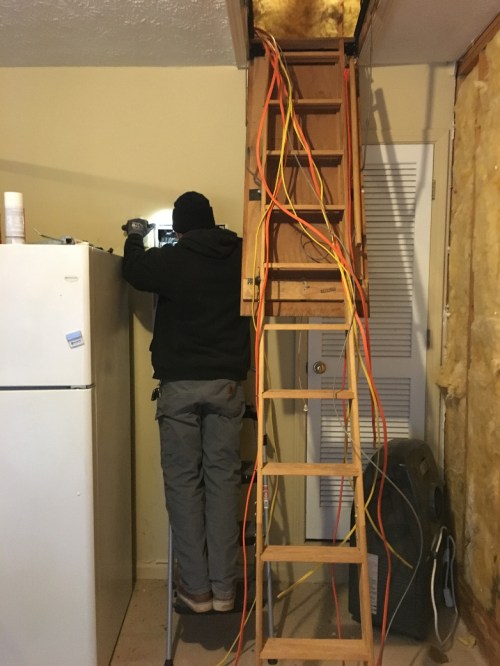
Connecting all of the circuits to the panel was uneventful.  It only took a few hours and we didn’t encounter anything unexpected.  Everything tested correctly on the first try.  Pulling the cables through the top plate and into the box took the most amount of time.  There wasn’t enough room at the top of the box to insert the cable clamps, so we had to pull them through the top-plate holes on the cable.
Now, I can install insulation in the walls and keep out some of the cold.  Stay tuned!

For the rest of the workshop build, check out the garage workshop build index.